Get Full Government Meeting Transcripts, Videos, & Alerts Forever!
Get email alerts on the Juvenile Justice topic
No spam. Unsubscribe anytime.
Juvenile‑justice commission presses for more local treatment beds and restorative‑justice expansion
Summary
The Montgomery County Commission on Juvenile Justice told the Health and Human Services Committee that system‑involved youth face limited access to timely behavioral‑health and substance‑use treatment, that some successful diversion programs have been cut, and that restorative justice implementation in schools should be expanded with fidelity.
The Montgomery County Commission on Juvenile Justice warned the Health and Human Services Committee that lack of timely, local behavioral‑health and inpatient substance‑use treatment for youth undermines prevention and rehabilitation efforts and increases reliance on out‑of‑county placements.
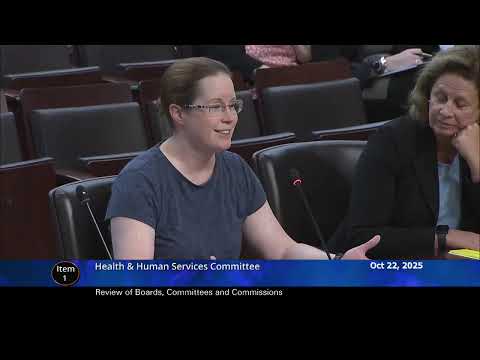
Cochair Carlotta Woodward said the commission is focused on ensuring rapid access to high‑quality mental‑health and substance‑use treatment for system‑involved youth. "We will focus on... high quality and timely mental health, drug treatment, therapeutic, and educational services for the system involved and our youth that are at risk," Woodward told the committee.
The commission noted that the county has obtained temporary access to residential substance‑use treatment beds in Baltimore but said relying on out‑of‑county placements dilutes local impact and continuity of care. Commissioners called for more investment in in‑county capacity, including inpatient beds where clinically appropriate.
Melissa Gohman, cochair, highlighted school‑system intersections and pointed to an increase in MCPS student arrests reported by the Maryland State Department of Education — a jump the commission cited as 56 arrests in 2022–23 to 191 arrests in 2023–24 — and argued that suspension and arrest practices must be addressed to interrupt school‑to‑prison pathways.
The commission also raised concern about the loss of pre‑detention and post‑school programs such as evening reporting centers and the Grama resource center that previously provided structured after‑school services and diversion supports; commissioners said those program cuts reduced prevention options for at‑risk youth.
The commission supports broader, fully implemented restorative‑justice practices where evidence shows reductions in re‑offending and racial disparities. It said it will coordinate with the county mental‑health advisory committee and the Alcohol and Drug Misuse Advisory Council on joint priorities and will continue to monitor state juvenile‑justice legislation.