Get Full Government Meeting Transcripts, Videos, & Alerts Forever!
Get email alerts on the Budget And Finance topic
No spam. Unsubscribe anytime.
Senior tax credit could cut $139,671 from Raymore revenue; staff warns of debt-service and bond risks
Summary
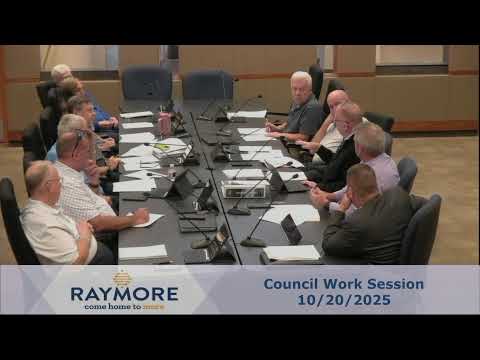
City staff told the Raymore City Council work session on Oct. 20 that Cass County's updated estimate of the senior property tax credit would reduce Raymore's revenue by $139,670.58, with $94,388 of that affecting the debt service fund.
City staff briefed the council at the Oct. 20 work session on the projected local impact of a proposed senior property tax credit, reporting a $139,670.58 reduction in Raymore's revenue based on updated numbers from the Cass County collector.
Staff said the county's figure breaks down to a projected reduction in the general fund of $43,563, a park fund reduction of $11,718 and a debt service fund reduction of $94,388. "The amount for Raymore is a $139,670.58," the presenter said at 00:28:20.
Officials warned the impact will accelerate over time and that the debt service fund is most vulnerable. Staff described a two-step accounting effect: assessed valuation used to calculate levies can rise, but the credit is applied later as contra revenue, creating what staff called a "double hit" on revenues. For existing bond issues, staff said state law permits the city to collect what it needs to avoid default and that the city may need to raise levies on debt service to meet obligations if collections fall short.
Staff also discussed pending litigation and timing. They said the senior credit is part of Senate Bill 3 (SB 3) and that two lawsuits are challenging the measure: Moon/Wolfen/Calzone v. State of Missouri (a challenge arguing SB 3 improperly combines multiple issues on one ballot) and Kirkhofer v. Missouri (filed by several school districts and others). Staff said if litigation is unresolved the issue could appear on the April ballot and take effect in fiscal year 2027. "It's gonna pass if it's out there," the presenter said at 00:34:40, describing voter behavior concerns.
Staff noted rating agencies reacted to a similar measure in Indiana last year and informed state and local governments that ratings could be lowered because of the uncertainty the credit introduces. The presentation said a lowered credit rating could make future bond issuance more expensive or restrict capacity.
Council members asked procedural questions about eligibility; staff said property ownership and primary-residence status remain the eligibility basis even if the property is held in a trust, but that trust ownership requires additional documentation at the assessor/collector office.
Staff recommended continued monitoring of litigation and its budgetary effects, and warned the city would need to address debt service consequences directly if the credit is implemented at scale.