Get Full Government Meeting Transcripts, Videos, & Alerts Forever!
Get email alerts on the Gsa Funding topic
No spam. Unsubscribe anytime.
GSA counsel outlines Prop 218, Prop 26 and Water Code paths for groundwater fees
Summary
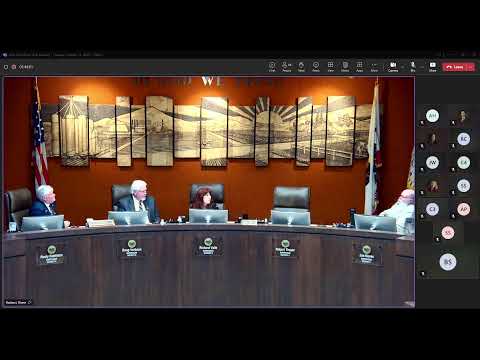
Jennifer Thompson, deputy general counsel for the Mid Kings River GSA, briefed the board on statutory options to raise revenue for groundwater management, outlining how Proposition 218, Proposition 26, the California Water Code and SGMA affect parcel fees, regulatory fees and penalties.
Jennifer Thompson, deputy general counsel for the Mid Kings River Groundwater Sustainability Agency, briefed the board on legal methods a GSA may use to charge rates, assessments or fees to fund groundwater management.
Thompson said Prop 218 governs property‑related fees and requires a ‘‘majority protest’’ hearing: parcels subject to a fee must be identified, fee amounts calculated, and written notice mailed; the hearing must be held no less than 45 days after notice and each parcel owner may file one written protest. ‘‘If there is a majority protest, meaning 50% plus 1 of the property owners protests, then you are not allowed to impose the fee,’’ she said.
She told the board that Prop 26 treats many levies as taxes requiring voter approval unless an exception applies. Two common exceptions relevant to groundwater are charges for a ‘‘specific benefit or privilege conferred’’ or for ‘‘a specific government service or product,’’ which can exempt certain groundwater‑related fees from an election. Thompson said the Water Code also expressly authorizes GSAs to impose regulatory fees, including for permits, extraction or other regulated activities, and sets a simpler adoption process (notice, publication, and at least 20 days’ public availability of the supporting data) than the Prop 218 protest process.
On penalties, Thompson noted SGMA‑authorized civil penalties are established in statute: ‘‘anyone who extracts groundwater in excess of the amount they’ve been allocated . . . could be subject to a civil penalty, not to exceed $500 per acre‑foot extracted in excess of their allocation,’’ and additional penalties up to $1,000 for other violations are available under the Water Code.
She emphasized that for property‑related fees the GSA bears the burden to show fees ‘‘do not exceed the reasonable cost of the governmental activity’’ and that fee amounts must bear a reasonable relationship to the service or benefit received by the parcel owner. Thompson recommended employing a consultant to calculate proportional fee amounts and to prepare the required notices and supporting data.
The presentation closed with procedural reminders to the board about differing notice, hearing and documentation requirements under the various authorities and a brief question period about collections and enforcement remedies (liens, collection agencies) if fees are unpaid.