Get Full Government Meeting Transcripts, Videos, & Alerts Forever!
Get email alerts on the Curriculum Change topic
No spam. Unsubscribe anytime.
District outlines course changes after Wisconsin Act 60, adds dual-credit and adaptive offerings
Summary
The district presented multiple course additions and modifications for 2026–27, driven in part by Wisconsin Act 60’s updated personal financial literacy requirements and teacher‑licensing rules.
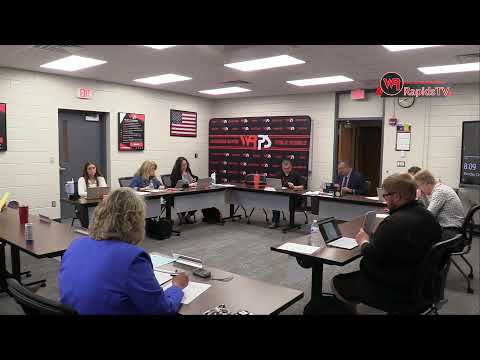
The Educational Services Committee reported to the board on Oct. 13 a set of curriculum proposals and course modifications slated for 2026–27, many driven by Wisconsin Act 60, which updates the state requirement that high school students complete a half-credit in personal financial literacy.
Roxanne Filts, director of teaching and learning, summarized that the bill restricts which licensed teachers may deliver personal financial literacy credit—limiting it to those holding licenses in social studies, family and consumer sciences, or business/information technology. That change means some existing classes (including certain math‑based offerings) can no longer count simultaneously for financial literacy and other content credits.
Key proposals presented to the board included:
- Eliminating accelerated financial algebra (Lincoln High School and Lincoln Virtual) as a vehicle for financial literacy credit and reducing Financial Algebra from 1.0 to 0.5 credit (math department lead Stacy Moyer presented prerequisites adjustments). - Adding a dual‑credit Tech College Math course (partnering with Mid‑State Technical College) to offer postsecondary credit aligned to business management pathways. - Renaming and narrowing the use of Principles of Economics courses (proposed new title: Money Matters: Economics and Financial Skills for Life) so those sections fulfill the financial literacy requirement but not social‑studies credit. AP Macro/Micro would continue to count as social‑studies credit but not for financial literacy under Act 60. - Proposals in other departments included Adaptive Arts for grades 6–8 (IDP‑based), adjustments to PE course levels and offerings, and converting certain required special‑education support classes to credit‑bearing courses.
Why this matters: The changes preserve compliance with state law while creating pathways (dual credit and revised courses) intended to maintain student access to financial‑literacy instruction. The district also flagged low enrollments in some affected sections and proposed prerequisites/teacher‑approval workarounds for Tech College Math.
Next steps: The proposals were discussed with curriculum leadership teams and the Council for Instructional Improvement; they will return for board consideration as required by the district’s adoption processes. Administrators said implementation would begin for the 2026–27 school year if approved.
Speakers quoted in this article are named in the speakers section below.