Get Full Government Meeting Transcripts, Videos, & Alerts Forever!
Get email alerts on the Affordable Housing topic
No spam. Unsubscribe anytime.
Council approves ordinance to reserve 22% of proposed sales-tax increase for Affordable Housing Fund
Summary
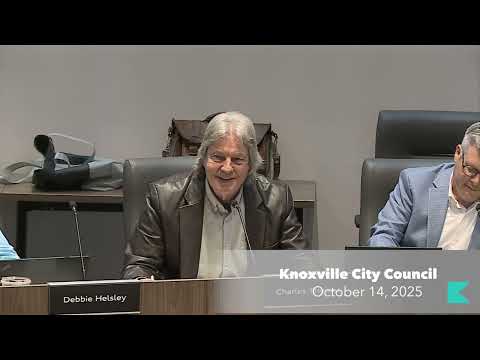
Knoxville City Council voted 8–1 on Oct. 13 to amend the city code to designate the lesser of $10 million or 22 percent of additional local option sales-tax revenue generated from any rate increase approved in the election on or before Nov. 4, 2025, to the city's Affordable Housing Fund.
Knoxville City Council voted 8–1 on Oct. 13 to amend the city code to designate the lesser of $10 million or 22 percent of additional local option sales-tax revenue generated from any rate increase approved in the election on or before Nov. 4, 2025, to the city's Affordable Housing Fund.
Supporters, including Anne O'Connor, co-president of Justice Knox, told the council that a stable local funding stream is critical for developers to stack financing and attract outside capital. "On average, developers using our local housing fund have leveraged $15 of outside financing for every $1 of local dollars," O'Connor said.
The ordinance drew backing from housing advocates and some council members who said the fund has helped produce thousands of affordable rental units since 2019 and that codifying a dedicated revenue stream would allow long-term planning. "The fund has proven its value," said Bonnie Graham, a Justice Knox vice president and retired nurse who described seeing housing instability in her work as a school nurse.
Council discussion focused on how the fund has been used to date, the fund's flexibility to address a range of housing needs and whether the city is prioritizing the right mix of investments. Council member Parker, who cast the lone vote against the measure, urged more explicit commitments to emergency shelter and temporary housing and asked for clearer reporting on which income bands projects actually serve. "We have to make an assessment of who is being served and what additional investments are needed," Parker said.
Kevin DuBose, director of Housing and Neighborhood Development, told the council the fund was intentionally flexible and said the majority of money has benefited households at or below 60 percent of area median income. He also noted that the fund has been used to leverage federal tax credits and other financing.
The ordinance passed on final vote 8–1; Council member Parker recorded the sole dissent. The change will allocate the specified portion of any qualifying sales-tax increase while preserving the remaining revenue for other city priorities after the five-year period described in the proposal.
Supporters said the city's prior investments produced nearly 3,000 affordable units since 2019 and that continued, predictable local dollars would help maintain momentum. Opponents and some council members urged clearer benchmarks for how funds should be prioritized across the housing spectrum, including shelter, transitional housing, permanent supportive housing and homeownership programs.
The vote rescinds no existing commitments; it amends the city code to dedicate the described share of new local-option sales-tax revenue if voters approve an increase.