Get Full Government Meeting Transcripts, Videos, & Alerts Forever!
Get email alerts on the Labor Police K9 topic
No spam. Unsubscribe anytime.
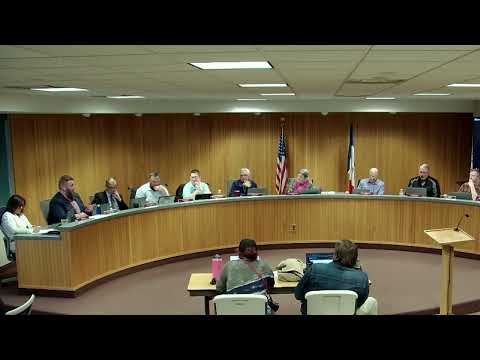
Decorah council rejects officer’s request to step down as K‑9 handler after lengthy debate
Summary
The Decorah City Council voted on a motion to allow Officer Nick Yaniff to resign from his K‑9 handler assignment and bid for a standard patrol shift; the motion failed by roll call, 3–4.
The Decorah City Council voted on a motion to allow Officer Nick Yaniff to resign from his K‑9 handler assignment and bid for a standard patrol shift; the motion failed by roll call, 3–4.
Officer Yaniff has served as the department’s K‑9 handler for nearly four years. Union representative Rusty McKeown told the council that the officer had “fulfilled his contractual and policy obligations” under the department’s K‑9 policy, which includes a stated minimum three‑year commitment, and asked that the officer be allowed to step down so he could exercise seniority to bid a regular patrol schedule. McKeown framed the grievance as a contract enforcement issue under Article 9, Section 7 of the collective bargaining agreement rather than a refusal to perform work.
City staff and the police chief opposed an immediate resignation on operational grounds. The chief and assistant chief said the K‑9 unit serves dual functions — narcotics detection and tracking as well as community outreach — and that no other officer in the department is currently trained to take over the handler role. Staff noted the next available external handler training (Code Blue) is not scheduled until March and that training a new handler with the dog could take additional weeks. City Manager Travis said the department had tried to minimize schedule disruption when shifting from a 3‑to‑3 schedule to the current schedule and argued staffing logistics and continuity required more deliberate succession planning.
Councilmembers split over the competing considerations. Several members — including Emily and Brent — cited officer retention, family responsibilities (the officer has young children) and morale as reasons to support Yaniff’s request. Other members emphasized management’s statutory and contractual rights to assign work and the city’s need to ensure uninterrupted K‑9 coverage for public safety. A central legal question the council considered was whether management may require an officer to remain in a specialized duty beyond the stated minimum when management contends the assignment is critical to department operations.
Councilmember Neil moved and Councilmember Parker seconded the motion to accept the resignation from the K‑9 assignment and allow the officer to bid on patrol shifts. Roll‑call votes were recorded as follows: Yes — Neil, Parker, Widdle (3); No — Zittergruen, Chisel, Missalinich, Olsen (4). The motion failed.
After the vote council members and staff discussed next steps: develop a succession plan for a new handler, pursue training options, and continue recruiting and internal cross‑training so the department is not reliant on a single handler. City staff said they would follow up with a timeline for training and identify interim coverage or housing options for the dog if a handler change is required.
What it means: The council did not grant Officer Yaniff’s grievance at this step. The denial does not preclude the union from pursuing further steps in the grievance process (including arbitration) under the collective bargaining agreement, nor does it prevent subsequent operational arrangements if the department and union reach a negotiated solution.
Votes at a glance: Motion to allow Officer Nick Yaniff to resign from the K‑9 assignment and bid patrol shifts — mover: Councilmember Neil; second: Councilmember Parker; outcome: motion failed, 3–4.