Get Full Government Meeting Transcripts, Videos, & Alerts Forever!
Get email alerts on the Digital Accessibility topic
No spam. Unsubscribe anytime.
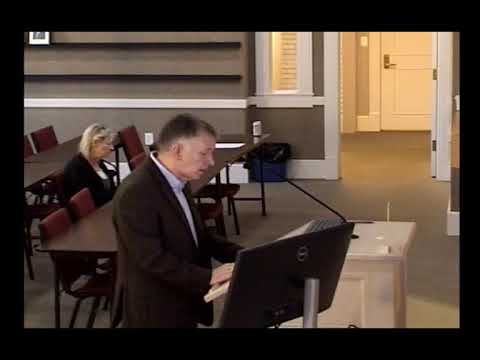
Paris City Council hears web‑accessibility, PEG channel and social‑media plans from public information officer
Summary
Public Information Officer John McFadden told the Paris City Council that a Department of Justice direction will require municipal websites and web content to meet WCAG 2.1 AA standards, described the scope and timeline for compliance and outlined plans for a PEG channel funded by franchise fees and a new social‑media team using CIVI Social.
John McFadden, the city’s public information officer, told the Paris City Council on Oct. 13 that a Department of Justice direction will require cities to bring web content into compliance with Web Content Accessibility Guidelines (WCAG) 2.1 AA.
McFadden said the requirement applies to pages, downloadable documents (PDFs), images, social media content and third‑party contractor sites and that the city’s current website has roughly 200 pages and about 1,400 images. He said scanned documents in the city’s Laserfiche system present a particular challenge because screen readers cannot parse scanned images without optical character recognition. McFadden gave the compliance deadline as April 26, 2027, for cities under 50,000 population (he said the deadline is April 2026 for cities over 50,000).
McFadden explained practical steps the city must take: adding alt text for graphics and logos, reformatting pages so screen‑reader users can navigate by headings and landmarks, ensuring consistent placement of contact information, and converting information that currently appears in flyers or complex images into text pages. He said some older or no‑longer‑relevant materials may be moved to an archival area rather than brought into compliance.
On the city’s planned website redesign, McFadden said the timing works well to fold accessibility fixes into the rebuild and to address responsive design issues that affect users on phones. He said the hosting vendor’s redesign (a routine multi‑year update included in the hosting contract) will address device responsiveness.
McFadden also outlined plans for a PEG channel to carry local programming and livestream city meetings. He said funding for PEG capital equipment comes from Optimum franchise fees designated in the company’s state franchise agreement; those funds may be spent only on capital expenditures and not on staffing or routine consumables. He said under underwriting rules the channel cannot carry paid advertising in the usual commercial sense, though underwriter acknowledgments are possible.
Finally, McFadden described a proposed social‑media team and training through CIVI Social and a consultant he named as Sam Toles. He said the program would train multiple city staff to create preapproved content so the city can post more consistently and ‘‘tell the story’’ of routine city work. He said submitted content would be reviewed before posting.
Council members asked about mobile usability and whether the redesign would fix responsiveness; McFadden said the redesign will address those issues. He also noted the city’s 311 project is intended to integrate with the website to allow residents to report issues and pull data from web records.