Get Full Government Meeting Transcripts, Videos, & Alerts Forever!
Get email alerts on the Pavement Management topic
No spam. Unsubscribe anytime.
Consultants urge Hart County to adopt multi-year road-rating plan to prioritize scarce paving funds
Summary
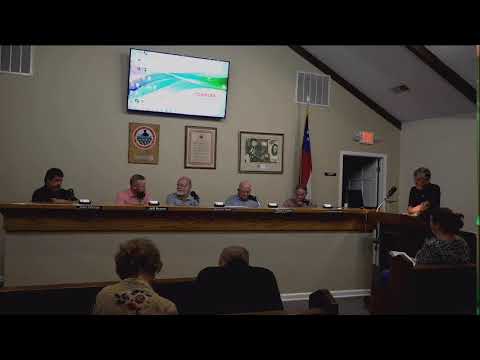
Aaron Wadley, a principal with LNCO Engineering (soon to be Terravia Engineering), and Chris Dills of Pavement Preservation Techniques told the Hart County Board of Commissioners that a formal road-rating plan would let the county prioritize which roads to preserve or resurface, program work over one- to five-year horizons, and make funding requests more defensible.
Aaron Wadley, a principal with LNCO Engineering (soon to be Terravia Engineering), and Chris Dills of Pavement Preservation Techniques told the Hart County Board of Commissioners that a formal road-rating plan would let the county prioritize which roads to preserve or resurface, program work over one- to five-year horizons, and make funding requests more defensible.
The consultants said a color-coded map tied to numeric ratings would show which roads need urgent full-depth work and which can be preserved with less expensive treatments, such as chip seals, microsurfacing or thin overlays. "If you can do a rating every 3 to 5 years, the money you spend on the rating will return in the value you get with the final product," Wadley said during the presentation.
Why it matters: commissioners face repeated requests from residents to pave specific roads while overall lane-mile burdens and funding limits mean the county cannot respond to every complaint. A road-rating system creates a transparent, repeatable prioritization that staff and elected officials can explain to residents and that consultants said helps when applying for state funds.
Key details: Dills described the technical approach used by GDOT and adapted for counties: automated rides (camera/LiDAR) and visual inspections produce a 0—100 numeric score, translated into four color bands (approximate examples explained to the board: blue/green/yellow/red). Dills said the county-scale breakpoints used for counties differ from DOT state-route breakpoints; the presenters suggested treating scores below about 60 as failing and requiring major rehabilitation or reclamation. Dills cited Madison County and Morgan County work as practical examples and said some counties using preservation techniques have raised annual lane-mile output from the low hundreds of lane miles to the 200—50 lane-mile range depending on funding.
Costs and procurement: the consultants gave historical unit-cost examples and warned that construction-unit costs have risen significantly in five years (chip seals and microsurfacing costs roughly doubled compared with their cited 2020 prices). They said a professional services agreement for the rating itself is a consulting contract (not construction) and thus generally procured under professional-services rules rather than public-works construction procurement. Commissioners asked whether ratings and lists should be published publicly; consultants recommended publishing a manageable one-year work list tied to realistic budgets and maintaining internal management lists to avoid misleading the public when funding changes.
Funding and grants: the presenters said state mechanisms such as GDOT quick-response funding and other targeted grants (they referenced the "3 E's" grant considerations: economic development, education and emergency access) have paid parts of projects in Madison and Morgan counties. They said those grants often require demonstrating a maintenance plan or showing a documented list of priorities.
Board reaction and next steps: commissioners pressed on frequency (they suggested a 3-to-5-year cadence), who would maintain the data, and whether the county must publicly bid ongoing work if total construction exceeds statutory thresholds. The consultants offered to provide a scoped proposal and cost estimate; commissioners agreed to have county staff (Terrell, Marshall) follow up to refine scope and procurement approach.
Attribution and sourcing: direct quotes in this article are from Aaron Wadley and Chris Dills during the presentation; other details reflect questions and discussion recorded during the meeting. The presentation did not include a formal board action to contract this work during the meeting; consultants were invited to draft a detailed scope for future consideration.
Ending: The board did not vote to hire a consultant at the meeting but directed staff to continue discussions and return with a refined scope and procurement plan for consideration at a future meeting.