Get Full Government Meeting Transcripts, Videos, & Alerts Forever!
Get email alerts on the District Finance topic
No spam. Unsubscribe anytime.
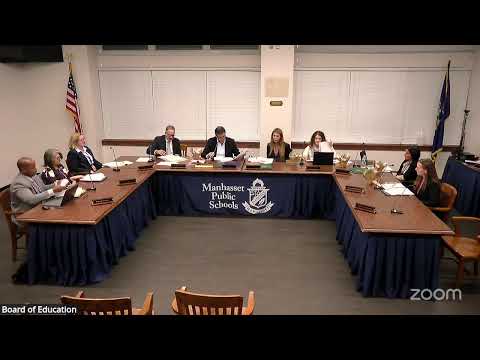
Manhasset board reviews audit, auditors recommend moving excess debt-service funds to capital reserve
Summary
Auditors told the Manhasset Union Free School District board that monies sitting in a debt service fund were earmarked for future bond principal and interest tied to capital projects, that the district used short-term BAN financing while awaiting state approvals, and recommended moving excess funds into the capital reserve within statutory limits.
The Manhasset Union Free School District board on Monday reviewed the district udited financial statements for the year ending June 30, 2025, and discussed monies currently held in a debt service fund.
An auditor explained that ‘‘you do have what we call a debt service fund, and that money is earmarked for future debt service payments,’’ and that the district, after voter approval of capital projects in 2023, had been advised to use short-term BANs while awaiting State Education Department approvals. The auditor said the bond principal and interest budgeted in prior years remain in the debt service fund until long-term bonds are issued.
Business-office staff and trustees sought clarification in plain terms about why money sits in the debt-service account and whether it is earning interest. Gerard, who recently joined the business office, confirmed the fund is collecting interest and that the district recorded transfers to debt service in the general fund when the board budgeted for principal and interest.
Auditors recommended transferring monies in excess of the board—stablished 4% unassigned fund balance into the capital reserve, after parsing out amounts needed for debt service and limits on the TRS reserve. Board members noted that voters previously authorized transferring up to $2,000,000 in June and that the amount identified as excess was slightly under that figure, meaning no additional board resolution would be required to move the funds.
Board discussion emphasized timing and sequencing: delays in SED approvals and COVID-related supply-chain issues meant construction and bonding did not follow the original schedule, producing a temporary accumulation in the debt-service fund. Trustees asked whether the balance was unusual; auditors and staff described the situation as a timing issue and a normal outcome when BANs are used as short-term financing.
No formal motion to move funds was taken at the meeting; the auditors dvice and staff recommendations will inform district fiscal actions and any necessary accounting transfers.