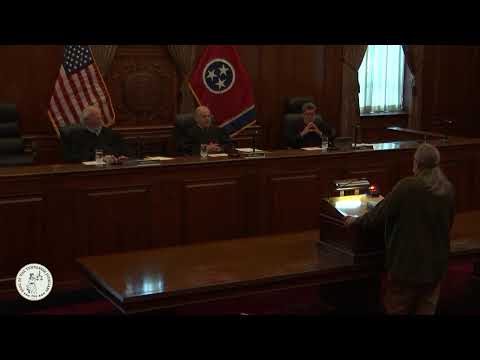
Petitioner alleges withheld evidence and unsigned judgments in Davidson County post-conviction hearing; state says petition is untimely
Loading...
Summary
At a morning hearing in Davidson County Criminal Court, defendant Christopher Allenhauser urged post-conviction relief, alleging Brady violations, altered mail records, and unsigned or unfiled judgment sheets; the state argued the petition is jurisdictionally untimely and should be dismissed.
Christopher Allenhauser asked a three-judge panel in Davidson County Criminal Court to grant post-conviction relief, alleging that prosecutors and public officials withheld exculpatory evidence, altered postal records and failed to file or properly sign judgment documents required by Tennessee law. He also raised claims about the denial of severance motions and the effectiveness of counsel at his criminal trial.
Allenhauser, identifying himself as the petitioner and defendant, told the court he had created a common-law contract under the "postal rule" and introduced an "Exhibit A" he described as the contract. He said witnesses later testified they had no contract despite earlier UCC-1 filings and sworn affidavits referring to one. "They swore they signed sworn affidavits, and then they turned around and committed aggravated perjury," he said, arguing that those actions amounted to withholding exculpatory evidence and invoking Brady v. Maryland and Tennessee precedent.
He told the court that he mailed post-conviction filings in May (listing delivery dates to several recipients) and asserted one signature card in the record had an altered date (05/16). He said an Office of Inspector General inquiry by the U.S. Postal Service is ongoing and that severance motions under Tennessee Rule of Criminal Procedure 14 were denied during pretrial. Allenhauser also asserted that numerous judgment sheets were never stamped, filed, or signed by the clerk as required by the Tennessee Constitution, which he said rendered the judgments void.
Allenhauser described trial-level concerns, saying he was held in custody approximately 15 months, did not consult with counsel, and was not permitted to speak at trial. He raised a Sixth Amendment argument and reported alleged mistreatment while detained. He also referenced federal bankruptcy filings by his former spouse and cited portions of Title 11 of the U.S. Code in support of his position about discharge and scheduling.
Representing the State, Assistant Attorney Evan told the panel the only issue properly before the court is timeliness. "The only issue that's properly before the court today is whether this petition was timely, and it was not," Evan said, arguing no statutory tolling applies and that the petitioner had options such as local e-filing. He added that the vast majority of the allegations could or should have been raised on direct appeal and noted that any ineffective-assistance claim would need to be fleshed out in a timely petition.
The panel took the arguments under advisement; the judge completed the morning docket and recessed until 1:30 p.m. There was no formal ruling on the petition during the morning session.