
PGCPS projects FY2027 costs growing faster than revenues as salary costs rise
Get AI-powered insights, summaries, and transcripts
Sign Up Free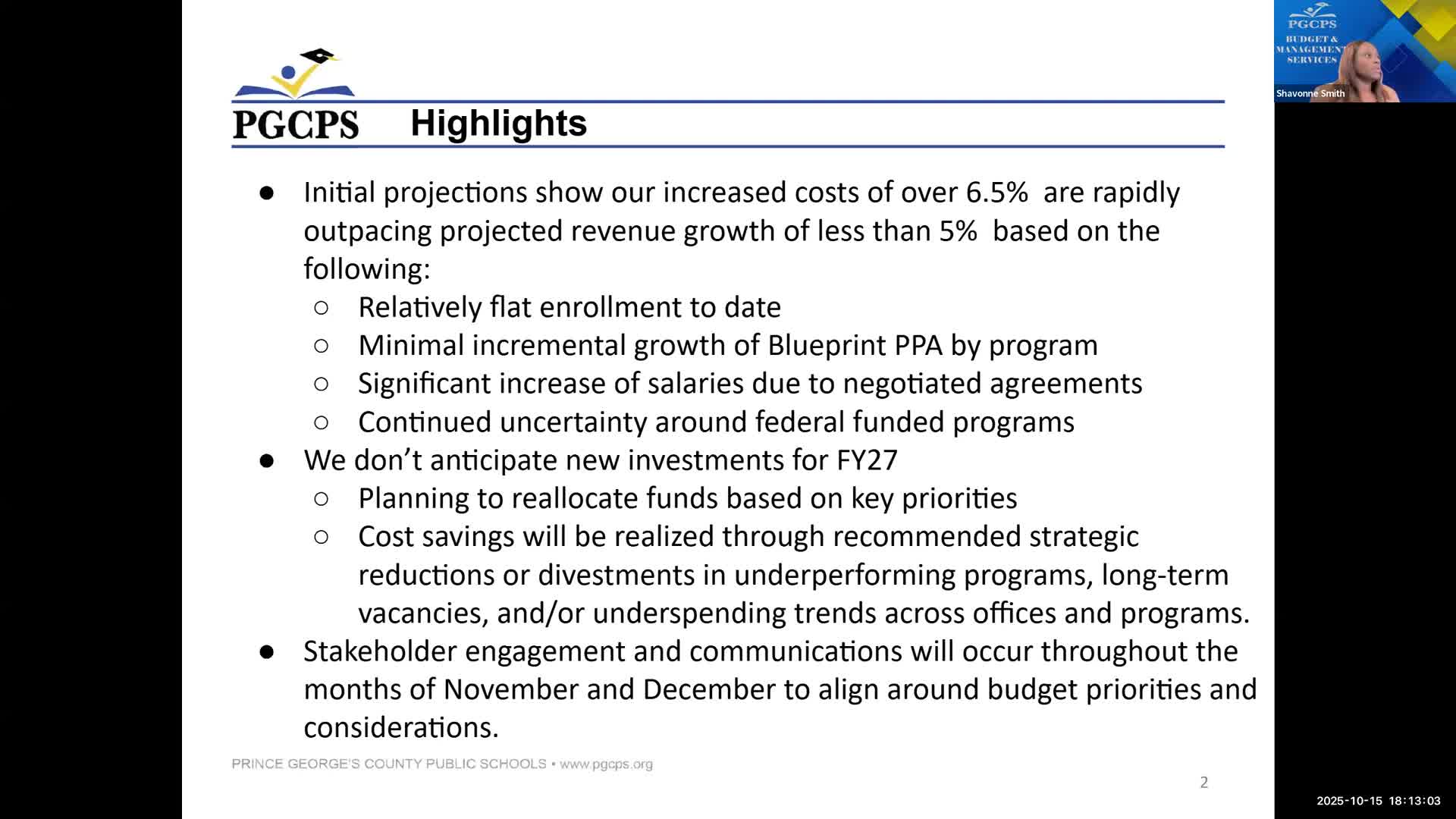
Summary
PGCPS budget staff told the committee early FY2027 projections show expenditures up about 6.5% versus revenue growth near 4.5%, driven primarily by rising salary costs from negotiated agreements and uncertainty over federal program funding; staff warned reallocations rather than new investments are likely.
Prince George’s County Public Schools budget staff on Oct. 15 warned the district faces a structural gap heading into fiscal year 2027: preliminary projections show expenditures rising faster than revenues, driven largely by increasing salary costs.
"Our costs or expenditures are increasing, over 6 and a half percent from '26 to '27," said Javonne Smith, director of budget and management services, adding the district currently projects revenue growth near 4.5 percent. Smith attributed the gap to relatively flat enrollment and negotiated salary increases.
Smith told the committee the district does not anticipate new investments for FY2027 and will instead reallocate existing funds around key priorities. "It will have to be a realignment," she said, noting potential strategies including targeted divestments, reductions of long‑term vacant positions, and closer monitoring of underspending patterns to free base budget dollars for priority areas.
Board members asked for clearer information about which positions remain vacant and how many posts have been unfilled over the last three years. Smith said that detail will require discovery across chiefs and directors and recommended a cross‑office review to identify hard‑to‑fill posts and quantify savings if positions are removed.
Staff urged robust stakeholder engagement over November and December to incorporate community survey results and listening sessions into resource allocation decisions. The committee did not vote on budget items; staff framed the presentation as an early call to action and invited board participation in upcoming engagement events.