Get Full Government Meeting Transcripts, Videos, & Alerts Forever!
Get email alerts on the Special Education topic
No spam. Unsubscribe anytime.
Guam education officials warn of unsustainable SPED aid shortfall and suggest local funding, task force
Summary
GDOE special-education leaders told a legislative oversight committee that a growing number of individualized education program (IEP)–mandated 1-to-1 aids and other specialized staff are unfunded, leaving schools to scramble for coverage and pushing the system toward noncompliance without new local resources.
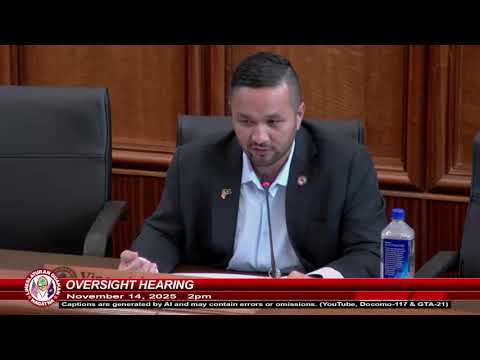
Assistant Superintendent for Special Education Tom Rabata told the Committee on Education, Libraries and Public Broadcasting on Nov. 14 that Guam’s special-education division faces a widening staffing and funding gap that is jeopardizing consistent delivery of IEP services. “For the last 3 years, school teams have been using internal resources at the school level to ensure the service is provided,” Rabata said. “This has overtaxed the current system.”
Rabata listed current vacancies and needs, including more than 100 disability aids (he cited 112 then later said the number may be about 130), shortages of speech-language pathologists, school psychologists, occupational therapists and behavior-support staff. He said most disability-aid positions are federally funded through the Part B grant—about $18,000,000 per year—but that more than $15,000,000 of that is now used for aids, leaving limited money for related services such as assistive technology and professional development.
Why this matters: Rabata estimated an IEP-stipulated shortfall of roughly 121 dedicated aids at the time he wrote a state complaint, at an approximate cost of $5.45 million to comply. He warned that without a sustainable local funding source, schools will continue patching coverage at the building level and compliance could erode. “Positions will not be approved for a request to fill without a funding source attached,” he said, describing the budget office practice that blocks hires without certified funds.
What the department says it is doing: Rabata described recruitment efforts and partnerships with the local university to create certification and online master’s pathways; he said nine teachers funded by GDOE are projected to complete special-education certification by the end of the calendar year. The department has also contracted for remote therapy services and is pursuing traveling clinicians for hard-to-staff licensed roles.
Lawmakers’ concerns and next steps: Senators pressed leadership on root causes including workplace culture, pay and retention. Chair Senator Borah and other members urged a combined approach of short-term funding and longer-term structural work. Rabata recommended forming a task force that includes fiscal, human-resources and school-level representation to (1) review current practices for identifying and assigning aids, (2) identify funding sources, and (3) develop recruitment and retention strategies. Senator Barnett and others urged immediate attention rather than waiting on a forthcoming management audit.
Representative quotes: Rabata: “The crisis is a supply and demand issue. There is an issue recruiting and retaining aids. The issue is also a funding issue.” Superintendent Swanson (on culture and staffing): “They are getting tired and they are worn down.”
What remains unresolved: The exact number of staff who have left in the previous 90 days was not provided on the record; HR said that short-term turnover tracking was not the dataset they were monitoring. Rabata and the committee agreed to follow up and schedule a targeted oversight session to monitor hiring, funding commitments and whether a task force or other legislative action is needed.
Next procedural step: The committee recessed and set a reconvening for Dec. 30 to review progress and transition plans before the superintendent change.