Planning board reviews major solar‑law amendments and new battery‑storage draft; key changes include sheep‑grazing limits, screening and battery safety rules
Loading...
Summary
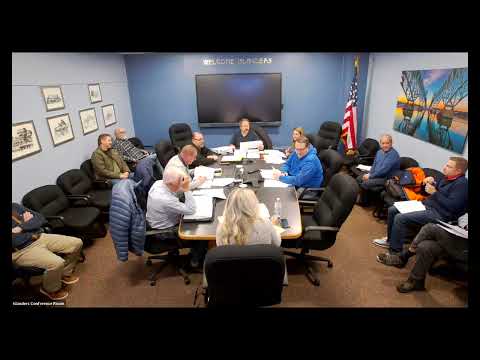
The Planning Board reviewed redlined amendments to the town's solar law and a new draft local law for battery energy storage, focusing on sheep‑grazing limits, screening standards, a proposed renewable overlay district and safety/testing standards for batteries.
The Grand Island Planning Board discussed significant updates to the town's solar regulations and reviewed a brand‑new local law addressing battery energy storage.
A planning staff member who helped draft the 2021 solar law guided members through the redlines: batteries were removed from the solar law and will be handled in a standalone battery law; new definitions (building‑integrated photovoltaic, building‑mounted systems, community solar tiers) were added; and the drafter proposed allowing sheep grazing as part of a vegetation management plan but limited to temporary grazing events "not to exceed 14 days per grazing event." The drafter said the 14‑day limit was based on guidance from Cornell Cooperative Extension and the state Ag & Markets materials.
Board members debated creating a renewable/solar overlay district to steer projects toward existing transmission and distribution interconnection corridors. Supporters said an overlay would concentrate projects where the grid can better accept new generation; others urged caution because overlays can be difficult to remove and suggested maintaining special‑use or case‑by‑case review to address visual impacts.
On screening and visual impact, the draft includes stricter buffer and planting standards for community and utility‑scale projects (up to two rows of native evergreen shrubs and ongoing maintenance obligations). Several members called the screening requirements "excessive" for sites that back to existing woods and suggested site‑plan discretion.
The proposed battery law sets tiered rules for small building‑mounted systems up to utility‑scale storage containers. For tier‑3 standalone battery storage, the draft proposes a 200‑foot setback from occupied structures, decommissioning cost estimates, annual maintenance reporting and the option to require applicants to meet testing standards comparable to New York City criteria. Planner Bridget (battery safety adviser) said modern battery systems include containment features that reduce thermal‑runaway risk and argued that referencing an established testing standard provides the town greater assurance of safety.
The board requested redlines and circulation of updated drafts to other advisory boards and agreed to provide comments; no final vote on either local law was taken at the meeting.