Get Full Government Meeting Transcripts, Videos, & Alerts Forever!
Get email alerts on the Committee Procedures topic
No spam. Unsubscribe anytime.
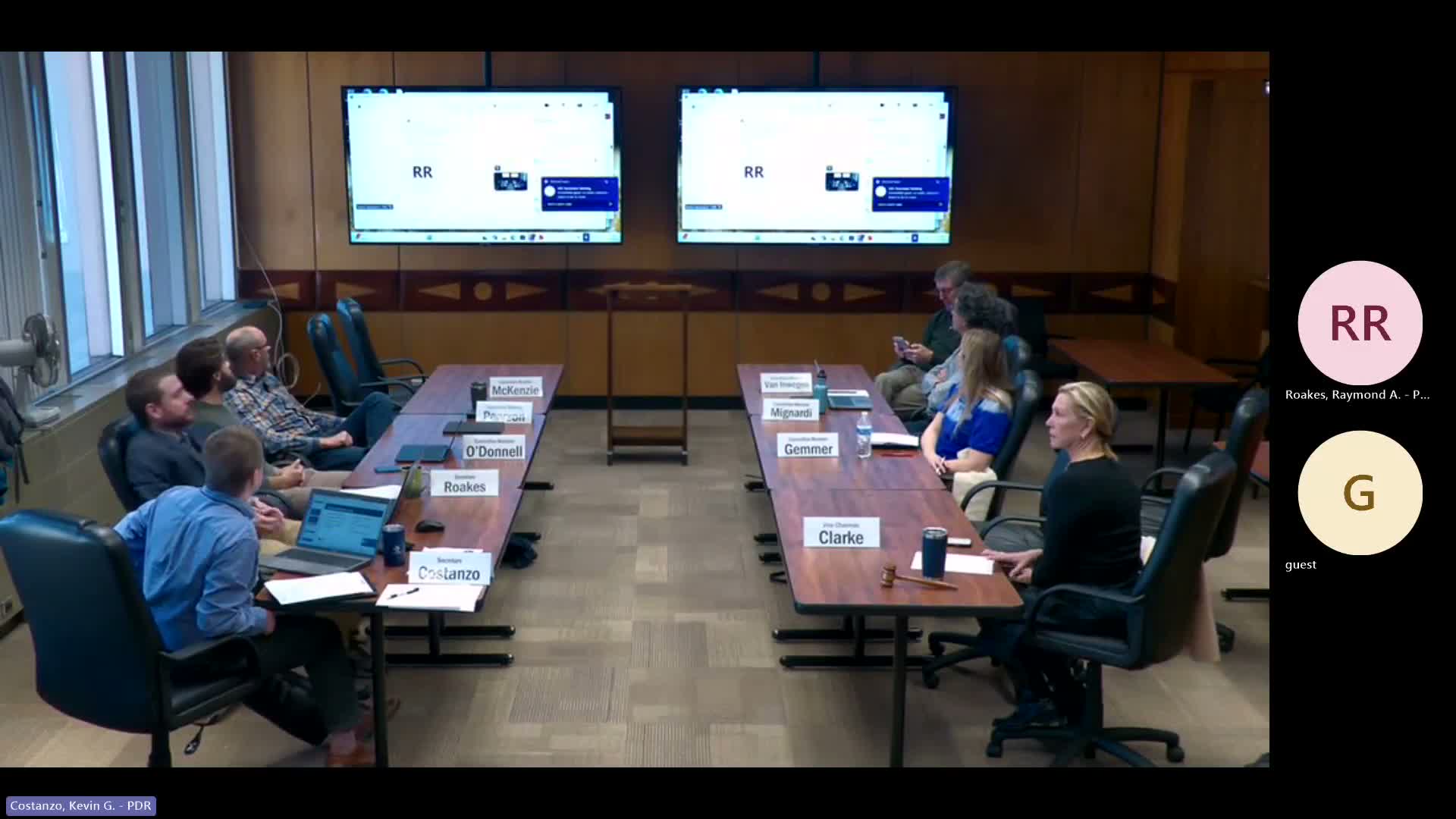
Richmond Urban Design Committee held orientation on rules, roles and meeting practices
Summary
At a training session, the Urban Design Committee reviewed Robert’s Rules, meeting logistics, quorum and public‑comment procedures; staff emphasized forming amendments for substantive changes, filing disclosures for conflicts, and that many small encroachments are delegated to staff.
The Urban Design Committee of Richmond City convened a training session on meeting procedures, committee role and the application review process. An organizer opened by explaining how to access the meeting remotely and that "public comment will be requested in turn for each item on the agenda," and asked participants to remain muted except when speaking.
Staff reviewed basic meeting logistics: the UDC meets monthly (second Thursday after the first Tuesday) at 10 a.m., a quorum is six members and high‑level summary statements will be provided and transmitted to the Planning Commission as the official minutes. Speaker 1 listed the committee’s six formal actions — conceptual approval as submitted; conceptual approval with conditions; final approval as submitted; final approval with conditions; deferral for resubmission; and disapproval — and explained that every motion requires a seconder and that the chair restates motions before votes.
Training material included a refresher on Robert’s Rules. Speaker 1 summarized precedence types and said the committee uses the usual privileged motions, including "motion to amend," "motion to table," "motion to refer," "motion to call the question," "motion to reconsider," and "motion to adjourn." The presenter advised members to avoid reiterating points that have already been made and to frame substantial contributions as amendments that require a second and become the current item on the floor.
Members asked practical questions about how and when to propose amendments. Speaker 6 suggested reading an amendment aloud and moving to amend; Speaker 3 confirmed it is acceptable to propose an amendment to the original mover. The group discussed improving meeting efficiency for full agendas, including possibly trialing a single‑turn speaking order when necessary.
On recusals and abstentions, staff said disclosure forms are required when a personal or financial interest exists and that recusal practices vary (some bodies require leaving the room for serious conflicts while in other cases a member may sit silently at the table); the staff clarification was that a member should abstain or recuse depending on the seriousness of the interest and follow the disclosure procedure.
The session concluded with staff offering to circulate the training slides and materials (the training presenter noted those documents were included in the meeting packet and available on the City of Richmond’s Urban Design Committee web page) and members agreeing to consider a one‑page Robert’s Rules cheat sheet for quick reference. The meeting was adjourned with direction to continue the planned training for other sessions.