
Spring ISD presents discipline trends, targets 10% normalized reductions and expanded supports
Get AI-powered insights, summaries, and transcripts
Subscribe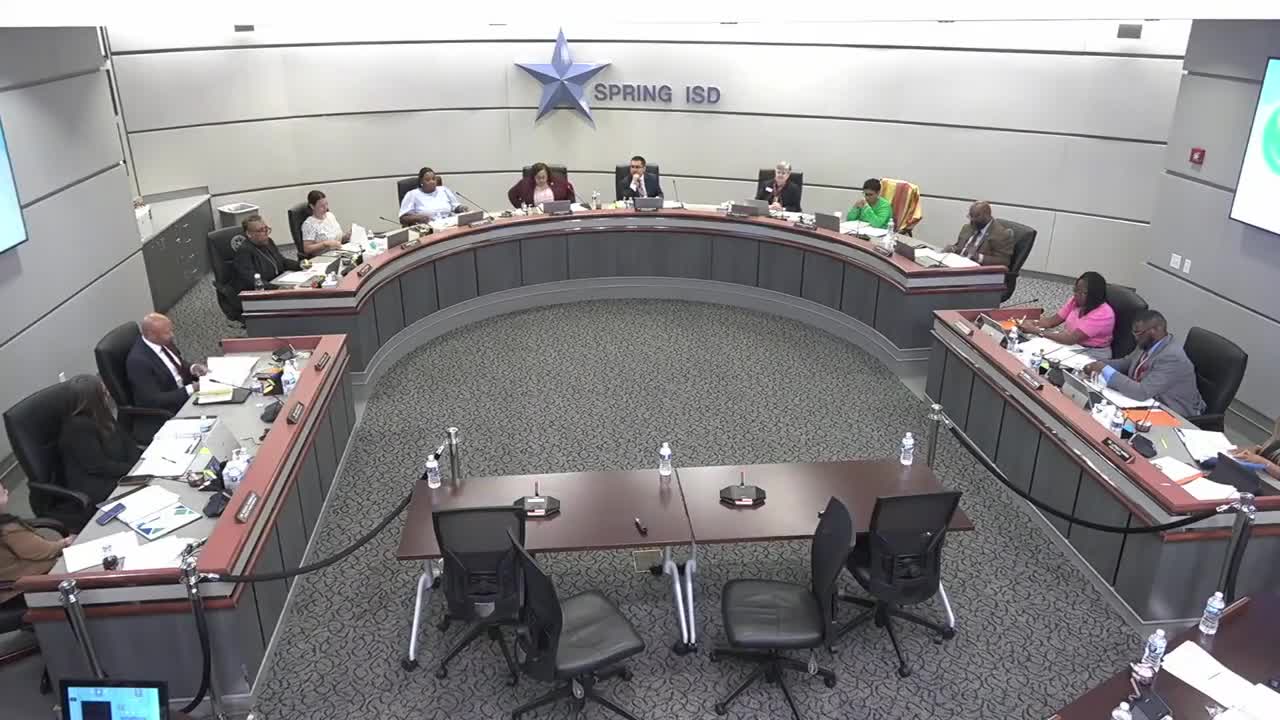
Summary
District leaders briefed trustees on first-six-weeks discipline trends, an initiative to reduce disciplinary infractions (10% normalized target), increased use of ISS due to legislative changes, weekly data monitoring, de-escalation training with Region 4 and plans to improve MTSS and reentry supports.
At the Nov. 11 meeting, Spring ISD leaders presented a high-level view of discipline across the district and outlined next steps intended to reduce removals from instruction and improve equity.
Nigel Simmons, student support services specialist, and Chief of Innovation and Student Support Dr. Michael Love reviewed five-year trend data for the first six weeks of the school year and tied the district's goals to Lone Star Governance targets. "One of our first goals is Spring ISD will decrease total disciplinary infractions by 10%," Simmons said, and noted the district is also targeting a 10% reduction in suspension rates for African American students and students receiving special education services.
Presenters said a legislative change removed a limit on in-school suspension (ISS) days, which has caused some campuses to rely more on ISS as an alternative to DAEP placements. Simmons said the district now monitors coding, provides weekly reports to campus teams (CBCs), and uses Region 4 to deliver de-escalation training and help build in-district trainer capacity.
Board members asked for more disaggregated, campus-level normalized-growth reporting and clarity about accountability measures. Trustee Adams requested baseline percentages and explicit month/year targets for every goal so trustees can track progress consistently. Trustees also asked about MTSS and PBIS supports; presenters said the reconstruction of the student support department is intended to centralize behavior, mental-health and guidance resources and to develop transition plans for students returning from alternate placements (Ritchie Academy, juvenile settings).
The presentation concluded with a request that the board receive periodic progress reports; administration said quarterly updates and a tiered dashboard are planned.