Committee backs owner-controlled insurance program to support Cleveland Hopkins terminal modernization
Loading...
Summary
The Transportation & Mobility Committee advanced an ordinance to create an owner-controlled insurance program (OCIP) for the Cleveland Hopkins terminal modernization, a seven-year umbrella insurance approach estimated at $45 million designed to lower barriers for small contractors and centralize claims management and safety oversight.
The Transportation and Mobility Committee on Nov. 14 advanced an ordinance to establish an owner-controlled insurance program for the Cleveland Hopkins International Airport terminal modernization program, an umbrella insurance arrangement the administration says will reduce costs and ease participation for smaller contractors.
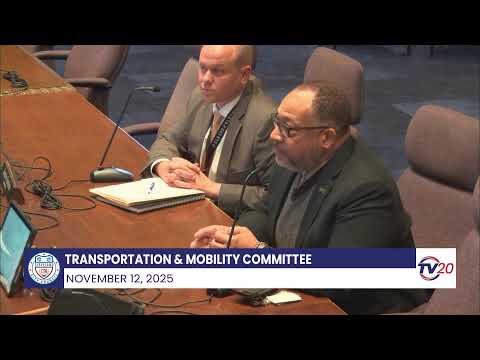
Assistant Director Dennis Kramer, presenting the proposal, said the OCIP would “give us the ability to realize some economies of scale” by bundling coverage for the entire program rather than requiring each contractor to buy separate high-limit policies. He added the program would include insurance program design, risk-control services, contractor bidding services, claims management and loss-control and safety services.
The administration and Pasley Group consultant David Arrendondo told council members the seven-year term matches the lifecycle of the capital program from start through closeout and provides sustained administrative oversight. Arrendondo said the program’s administrative tools are intended to reduce claims and improve safety oversight, and that “the program is the insurance rep is paying for it, the claim.”
Council members pressed for detail on how the program would help smaller, minority- and female-owned firms that historically struggle to obtain high-limit policies. Kramer and Pasley officials said the OCIP would allow firms that cannot independently obtain, for example, $10 million in airfield coverage, to be enrolled under the program’s umbrella so they can bid and perform work without sourcing separate policies.
Officials said project costs tied to the program are typically included as part of the stated cost of work and that coverage under the OCIP would generally apply to work on the project site; travel-to/from incidents would remain the responsibility of contractors’ own policies. The committee’s chair said the model could be replicated across city projects and moved the item to the finance committee for further review.
The committee did not adopt the final financing package at the meeting; staff said the estimate for brokerage and program administration work is about $45 million and that further review with finance is planned.
What’s next: The ordinance was forwarded to the finance committee for additional scrutiny of cost and implementation details, including how the administration will enroll subcontractors, allocate premiums, and manage claims administration.