McHenry County denies Pebble Solar conditional‑use permit after debate over trees and wetlands
Loading...
Summary
The Zoning Board of Appeals denied Pebble Solar LLC’s conditional‑use permit for a commercial solar facility (Z250065) by a 5–1 vote. The hearing focused on a new tree survey and wetland delineation, added mitigation conditions and whether the design had minimized impacts to notable trees and jurisdictional wetlands.
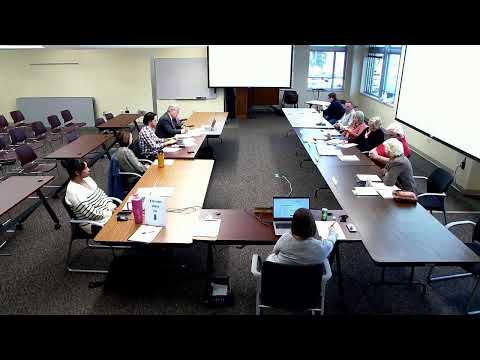
The McHenry County Zoning Board of Appeals on Oct. 22 denied a conditional‑use permit for Pebble Solar LLC’s proposed commercial solar facility (case Z250065) after prolonged testimony about tree removal, wetland impacts and neighborhood screening.
Petitioner materials submitted before the continued hearing included a tree survey and a wetland delineation the developer asked be entered into the record. Dylan Haber, lead developer for Pebble Solar (a subsidiary of Cultivate Power), summarized the tree survey results: “We did have a count of 1,321 total trees in the surveyed area … 85 total are considered to be notable to McHenry County … Only 4 of these 85 trees are anticipated to have to be removed and those are … along the edge of that existing curved access road.”
Environmental scientist Sarah Skowronski of Kimley‑Horn summarized the wetland work and Corps permitting expectations: “The posts themselves are not considered by the U.S. Army Corps as permanent impacts. It’s considered a temporary impact,” she said, describing a pre‑application and permitting pathway and stating that no grading or fill is proposed within the delineated wetlands.
The team also described design choices intended to reduce impacts: existing curved access would be used rather than cutting a new straight access road; panels were moved outside the county‑identified environmentally sensitive area and floodplain; the design left a 20‑foot buffer near the FEMA floodplain. The applicant said it had a gift agreement with the McHenry County Conservation Foundation to support a local reforestation project.
Board members pressed for clearer mitigation: they asked whether the developer would accept numeric limits on tree removal, narrower road widths subject to fire‑district approval, and denser screening for a neighbor whose property abuts the northern array. Petitioner representatives repeatedly stated they were willing to work with neighbors and accepted conditions framed as “best commercial efforts.” Environmental Defenders representative Erin Kennedy thanked the board for review but cautioned that wetland plantings “will take several years to establish.”
Following public comment and debate, the board added three explicit conditions on record: a requirement to increase and/or relocate the landscape buffer near the adjacent northwestern neighbor consistent with an exhibit and with demonstrated consultation/consent (approved 6–0 as Condition 10); a requirement for the petitioner to make commercial best efforts to work with the fire district to reduce road width and thereby avoid tree impacts (approved 6–0 as Condition 11); and a commercial best‑efforts limit on tree removal of no more than 35 trees measuring 3 inches DBH or greater (approved 6–0 as Condition 12).
Despite those added conditions, a motion to approve the conditional‑use permit (moved by Mr. Eldridge and seconded by Mr. Schnabel) failed on a 1–5 vote after multiple members said the applicant had not meaningfully reduced panel count or otherwise minimized ecological impacts to the board’s satisfaction. The board then moved to deny the petition; the denial passed 5–1.
Board members who voted against approval cited insufficient mitigation and concern about cutting mature oaks and other hardwoods in a forested site. Members in favor of denial noted that while state siting laws and county ordinances set parameters for approval, the board judged this particular site plan had not done enough to reduce ecological impacts. Chair closed the hearing after the denial vote.
What the record shows
- Tree survey: 1,321 trees counted; 85 noted as oaks/hickories (≥12" diameter); petitioner estimates a maximum of 29 trees likely to be removed to construct the project, with the petitioner and witness giving a possible ±5‑tree uncertainty for final layout.
- Wetlands: Two wetlands delineated on site (one ~0.72 acres the petitioner described as non‑jurisdictional; one ~3.4 acres that the petitioner and wetland scientist described as likely jurisdictional and subject to U.S. Army Corps review). Petitioner said no grading, fill or permanent structures would be placed in wetlands; piles for solar posts would be driven and treated as temporary impacts in Corps permitting.
- Conditions added on the record before the final vote: (1) increased landscape buffer/screening near the identified neighbor with neighbor consultation (6–0); (2) commercial best efforts to work with the fire district to narrow the road and avoid tree impacts (6–0); (3) commercial best efforts to limit tree removal to no more than 35 trees 3 inches DBH or greater (6–0). The petitioner agreed to the commercial‑best‑efforts language and to work with the neighbor.
The board’s denial means the petitioner must either revise the proposal and reapply or pursue other avenues available under county and state law.