
Consultants find Stevens Lake dam structurally marginal; URA to sample sediments before deciding on breach
Get AI-powered insights, summaries, and transcripts
Subscribe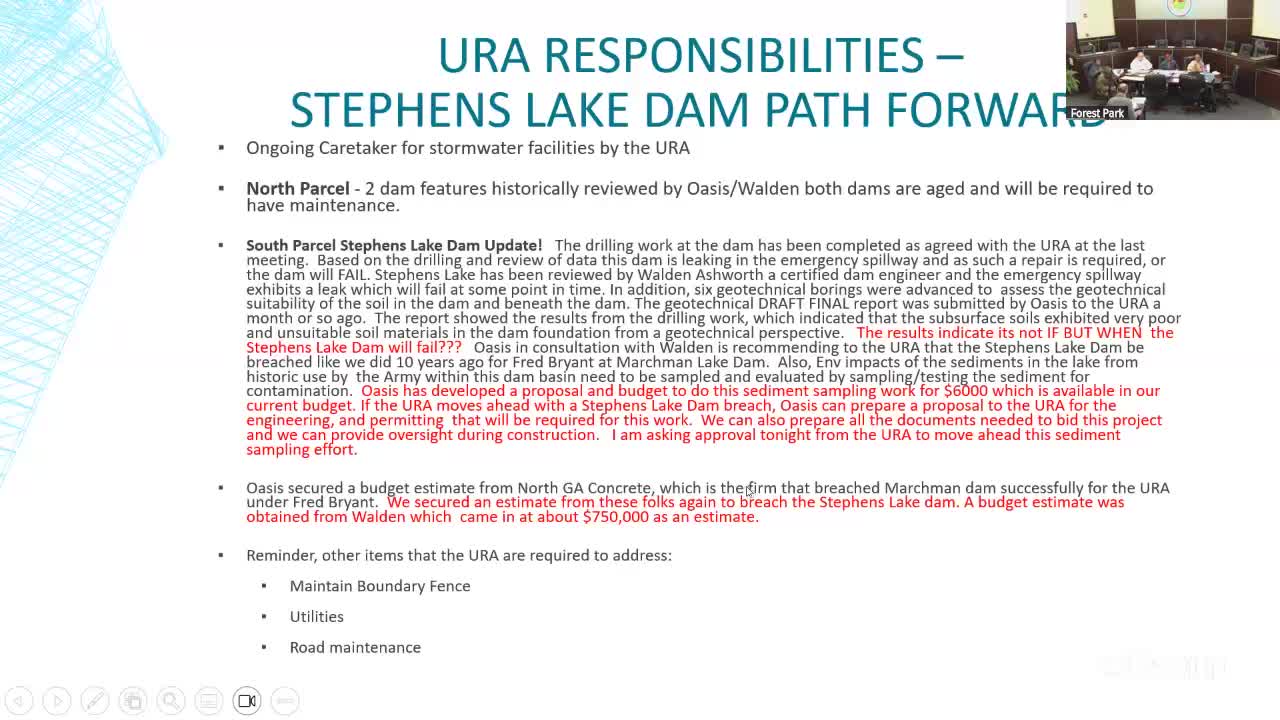
Summary
An Oasis Consulting geotechnical study told Forest Park URA that Stevens Lake Dam’s embankment is marginal and should be remediated; consultants recommended sediment sampling and said a controlled breach could cost roughly $750,000, subject to permitting and contamination results.
Forest Park — A geotechnical study presented to the Forest Park Urban Redevelopment Agency found that Stevens Lake Dam on the south parcel has marginal structural stability and “should be remediated,” the consultant told the board.
Mike Montalione, executive vice president of Oasis Consulting Services, said drilling and analysis show high groundwater, active seepage through the embankment and no confirmed keyway or cutoff under the dam — features that normally keep groundwater from undermining an embankment. “The overall structural stability of the dam and the embankment is marginal at best and should be remediated,” Montalione said.
Montalione recommended planned remediation rather than waiting for a failure. He described a remediation approach that would undercut and rechannel the embankment — a controlled breaching similar to work the URA completed at Marchman Lake — to create a self-regulating channel and stable outflow. Citing experience from Walden Ashworth and other dam specialists on the project team, he gave a preliminary estimate of about $750,000 to breach and stabilize the dam, calling that a back-of-the-envelope figure contingent on final design and permitting.
Before any major construction, Montalione told the board he needs sediment and soil data. He asked the URA to authorize sediment sampling from the lake and a soil sample at the old Forest Park firehouse so the firehouse parcel can be added to the Georgia Brownfields program. Montalione said sampling is essential to determine whether dredging or breaching will expose contaminated sediments and to establish a remediation path.
On sampling costs, the presentation included several figures discussed in sequence: Montalione referenced an earlier March estimate of roughly $6,000 for basic sediment sampling and later cited numbers of $66,000 for a more extensive sampling program and about $13,000 to test the firehouse parcel for Brownfields inclusion. He said the sampling can likely be done under the team’s existing contract and that staff budgeted for sampling work.
The URA’s counsel and board discussed whether sampling results should be handled in-house under attorney–client privilege before public release; counsel indicated that is a possible path for internal deliberations. Board members emphasized urgency, noting that Marchman Lake’s breach was completed previously at URA expense and urging staff to complete sampling so the agency can decide on engineering and funding.
Montalione also reminded the board the property’s environmental insurance is scheduled to expire around June 30, 2026, which the agency should consider when weighing next steps.
Next steps: the consultant will proceed with sediment and soil sampling under existing budgeting/contract authority and provide design and permitting proposals for a controlled breach only after data are available and the URA determines remediation is warranted.