
Aurora committee praises Navigation Campus, expands outreach and court‑linked services
Get AI-powered insights, summaries, and transcripts
Sign Up Free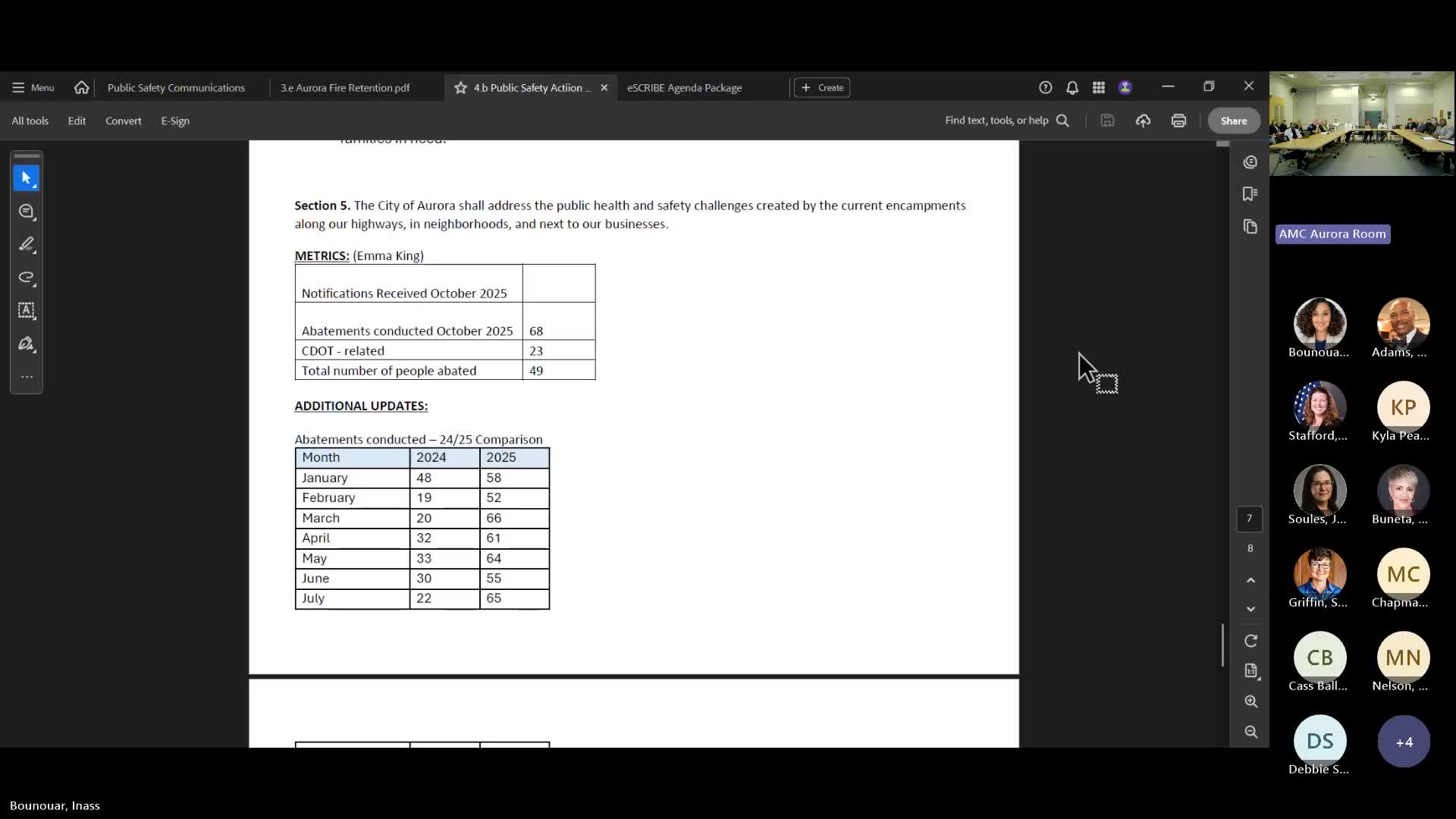
Summary
Committee members and program leads described the new Navigation Campus, mobile crisis teams and youth‑violence call‑ins; municipal court will hold on‑site sessions and clinicians are being selected via RFP to support the campus.
The Public Safety Committee reviewed progress on Aurora’s Navigation Campus, youth‑violence interventions and crisis response teams, with staff describing transitions of services to the on‑site center and steps to stabilize referrals and clinician support.
Jessica (speaker 11), who leads youth‑violence efforts, said staff conducted 16 custom notifications in the last month, will hold quarterly call‑ins for people connected to gun violence, and recently hosted a governing board meeting with partner agencies. She said the program is growing and complements the city’s broader gun‑violence reduction work.
Committee members and staff briefed the group on the Navigation Campus, which opened with a public open house attended by more than 200 people. Staff said roughly 109 people who had been staying nightly at the day resource center will transition to the campus, which will offer clinician services, court sessions, job supports and navigation on site.
Judge (speaker 8) said the first on‑site court session at the Navigation Campus is expected Dec. 10 and that the program will provide an on‑site navigator and daily presence to improve engagement. Staff also said the city is in an RFP process for a clinician contract (UCHealth applied and other respondents applied) and anticipates awarding a contract to begin in January.
Crisis response and mobile response teams continue to manage referrals and case management, and the committee heard that two additional state‑grant‑funded outreach workers will augment the team for about a year.
What’s next: staff will continue case management and interviews for clinician providers; court and navigation‑campus staff will monitor transportation barriers and program engagement as services transition on site.