CSU finds ShotSpotter accurate but limited; Cleveland to weigh staffing, cost and alternatives
Loading...
Summary
Cleveland State University’s independent two‑year evaluation found ShotSpotter reliably detects gunfire, improves evidence collection and can speed responses to some incidents, but it rarely functions as a standalone crime‑reduction tool. The city acknowledged contract phase‑out plans, discussed costs/coverage and said it is evaluating alternatives (including Flock) while council members pressed for RFP transparency, staffing data and community‑trust analysis.
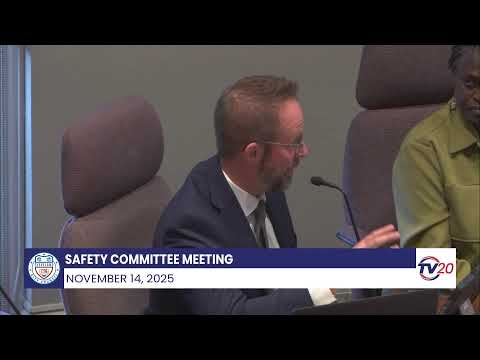
An independent two‑year evaluation by Cleveland State University (CSU) concluded that the ShotSpotter gunshot‑detection system reliably detects gunfire and can improve response times and evidence collection, but it is not a standalone solution for reducing violent crime. CSU researchers Stephanie Kent and Rachel Lovell told the Public Safety Committee that their mixed‑methods assessment — comparing ShotSpotter alerts with 9‑1‑1 data, conducting field observations, surveying officers and surveying and interviewing residents — produced six principal findings: ShotSpotter is generally accurate at identifying gunfire; it increases priority‑1 calls for service and can strain limited police resources; it improves evidence collection in some cases; it is difficult to fully integrate with other policing technologies without deliberate alignment; it shows no clear Fourth Amendment problems in their observed implementation; and it is not sufficient by itself to reduce gun violence.
Wayne Drummond, director of public safety, said the city commissioned CSU under Ordinance 909‑2022 and acknowledged both the benefits and limits noted in the report. Drummond and Division of Police representatives described how ShotSpotter alerts sometimes produced earlier officer arrival than would have occurred from a 9‑1‑1 call and enabled officers to render first aid to suspected shooting victims before EMS arrived. CSU cautioned that while alerts occurred earlier, the study could not establish with statistical certainty that the earlier response definitively saved specific lives because the researchers did not have medical records or an experimental control.
The committee discussed cost, coverage and procurement. Transcript discussion identified phased contract coverage that began with approximately 3 square miles in District 4 and later expanded to as much as 13 square miles; the administration reported active coverage of roughly 10 square miles on an April‑2026 paid‑through date for the Phase‑2 contract. Sound Thinking (formerly ShotSpotter) representatives said roughly 175 municipalities use their gunshot‑detection technology and that they can integrate with CAD and the city’s real‑time crime center software. The administration said it is actively evaluating other vendors and technologies (including an ordinance introduced to authorize a contract with Flock Group), and committee members pressed why an RFP had not been released for the new technology contract and asked for records of procurement, RFPs, and the license‑plate‑reader contract history.
Council members also focused on human‑resource constraints. CSU and police officials said ShotSpotter produces on average about 20 additional priority‑1 alerts per day citywide, and several council members argued Cleveland currently lacks the officer staffing to absorb those additional calls without degrading response to other crimes. Councilmembers requested staffing rosters, recruit/class demographic breakdowns, and analysis tying ShotSpotter usage to investigative outcomes such as arrests, NIBIN leads and homicide clearance. CSU reported that investigators only sometimes request detailed forensic ShotSpotter reports (CSU found that many investigators rarely or never requested them), which limited the technology’s forensic contribution in many cases.
What’s next: The administration said it will continue to evaluate technology options and integration strategies, and the committee asked the administration and procurement staff to provide RFP/contract documentation, additional analysis of arrests and case outcomes linked to ShotSpotter alerts, and demographic breakdowns of incidents and staffing before any renewal or expansion decision.