Get Full Government Meeting Transcripts, Videos, & Alerts Forever!
Get email alerts on the Menacing Healthcare Workers topic
No spam. Unsubscribe anytime.
Cleveland committee amends then rejects tougher menacing penalty for health‑care workers; requests more data
Summary
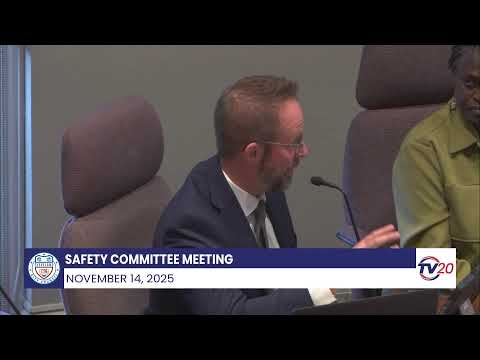
The City Council Public Safety Committee debated Ordinance 13‑80‑25 to raise penalties for menacing health‑care workers to a first‑degree misdemeanor with a mandatory three‑day minimum. After amendments to broaden the definition of "health care worker" and sharp questions about bias and implementation, the ordinance failed in committee and members asked staff for demographic and incident data before further action.
Council’s Public Safety Committee considered Ordinance 13‑80‑25 — introduced by Councilmembers Blaine Griffin and Michael Polensek — which would amend Codified Ordinances §6.21.07 to increase the penalty for menacing a health‑care worker to a first‑degree misdemeanor, carrying up to six months in jail and a possible $1,000 fine, and imposing a mandatory minimum sentence of three days when the victim is a health‑care worker performing official duties. Assistant law director Jennifer O’Malley described the change as intended to “discourage and strongly penalize increasing workplace violence against health care workers.”
The committee heard from Cleveland Clinic representatives, including Dallas Moyer, senior project manager for the Clinic’s Center for Workplace Violence Prevention, who presented national and local statistics showing elevated rates of workplace violence against health‑care staff and voiced the Clinic’s support for the ordinance. Cleveland Clinic Police Chief Dionne McCauley said clinic officers respond to incidents on Clinic property, take police reports, and encourage prosecution, and that increasing penalties “acts as a deterrent” and signals accountability for threats to caregivers.
Several councilmembers expressed support for protecting caregivers but pressed for limits and safeguards. Members asked how the ordinance would be applied to people under the influence or patients coming out of anesthesia, and whether racial or other bias in charging and prosecution could lead to disproportionate impacts. Councilwoman Stephanie House Jones and others repeatedly requested demographic breakdowns of reported incidents, numbers of repeat versus first‑time alleged offenders, and data from other health systems (MetroHealth, the VA and trauma centers) before the ordinance moves further.
To address definitional concerns, the committee adopted two amendments proposed by a councilmember to add “but not limited to” language so lists of included roles (for example, “such as doctors or nurses”) would be non‑exhaustive. Those amendments passed by voice vote. The committee then took a roll call on the ordinance as amended; recorded votes in the transcript include Gray: No; Casey: Yes; (a member recorded as) Al Jones: No; Kelly: Yes; Star: No. The chair announced the legislation did not pass in committee.
The committee requested that staff provide the additional data at the finance committee stage — including incident counts, demographic breakdowns, and whether alleged perpetrators were first‑time or repeat offenders — and indicated that the ordinance could be reconsidered once that information is available. The chair said he would discuss the outcome with the council president.
What’s next: The ordinance failed to pass committee. Council members asked staff to compile the requested clinic and citywide incident and demographic data for the finance committee; any renewed action would depend on that follow‑up material.