Get Full Government Meeting Transcripts, Videos, & Alerts Forever!
Get email alerts on the Community Testimony Facilities Coaches topic
No spam. Unsubscribe anytime.
Students, coaches and community groups press Baltimore leaders for facilities, transport and trained coaches
Summary
At a City Council hearing, students, nonprofit leaders and coaches praised middle‑school sports expansion but told officials that unreliable buses, rundown gyms, staffing and field access must be resolved for the program to scale equitably.
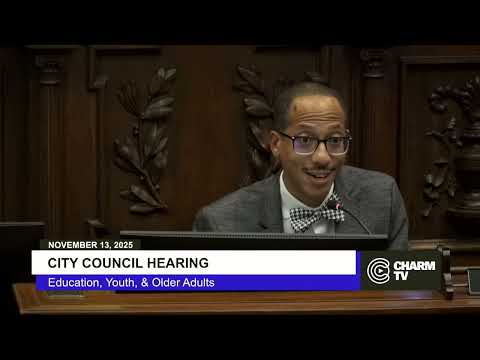
Students, coaches and community providers used the City Council informational hearing to both praise Baltimore’s middle‑school sports expansion and press city leaders on what’s needed to sustain it: facilities, reliable transportation, more coaches and consistent funding.
Katie Colas, a seventh‑grader at Thomas Johnson Middle School, told the committee, “Playing middle school sports really allows me to represent my school to our community and be a leader inside of my school.” Her testimony was echoed by assistant principal Katie Scottie, who said Thomas Johnson expanded to seven teams this year but that sustaining that growth requires money for uniforms, equipment, transportation and coaching stipends.
Community providers described partnerships and scale. Abby Marco of SquashWise said the organization increased participation “from about a 100 participants a year … to more than 700 students in Baltimore City Schools” after city funding and partnership. Angelo Solera, who said he plans a soccer clinic for Latino kids in East Baltimore, and Omar McDowell, a boxing program director, both urged the city to invest in organizations that already operate year‑round programming.
Several witnesses flagged facilities and logistics. Kenny Kulas, a volunteer coach, said he’s attended games where “lights are burned out in the gym,” and other speakers described buses that arrive late or fields that are poorly maintained. Community organizer Sam Brand urged system‑level planning and warned against relying solely on one‑off clinics: “We are not starting something new. We are just building off the foundations of their sweat and love,” he said, calling for long‑term investment in leaders who have sustained programming.
Officials acknowledged the concerns and described steps to respond. City Schools and Recreation & Parks said they are coordinating capital projects (turf fields, gym renovations) and that BCYF’s learning lab will provide coach training and organizational supports. Noelle West of the mayor’s office said the administration will convene agencies to align data, assets and facilities and will return with updates at a future hearing.
The testimony finish: witnesses asked the council to sustain funding, help with volunteer recruitment and ensure that investments reach schools and neighborhoods that have been left out.