
Holland City group reviews EV charging, fleet electrification and regional mobility in transportation strategy
Get AI-powered insights, summaries, and transcripts
Sign Up Free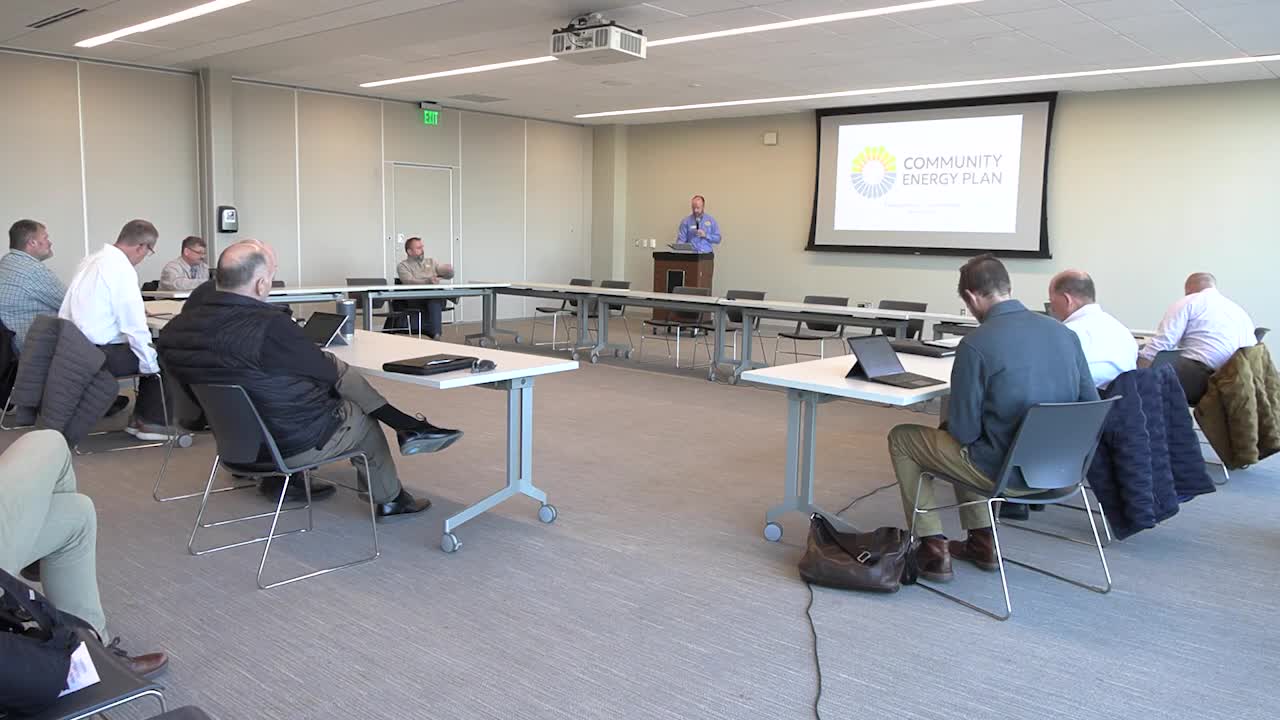
Summary
At a Nov. 12 Strategic Development Team meeting, staff outlined targets and incentives for EV charging and fleet electrification, noting current EV adoption is ~1.1% and that DC fast‑charger rebates run up to $35,000. Members urged regional collaboration on transit and mobility plans.
Andrew, the staff presenter to Holland City’s Strategic Development Team, opened the transportation discussion by saying the sector accounts for “about 16 to 17% of the overall emissions pie for the city of Holland.” He reviewed infrastructure targets and incentives for three charger types: Level 1 (standard outlets, no rebate), Level 2 (home and many commercial chargers with a BPW rebate tied to enrolling in a time‑of‑use rate) and DC fast chargers, where rebates can be as high as $35,000.
Why it matters: Transportation is a leading source of local emissions, and the plan’s targets include a 30% reduction in transportation‑sector carbon by 2030. Staff reported Holland has achieved roughly an 11% reduction so far, which Andrew cautioned is partly driven by COVID‑era travel changes. He also said local EV adoption remains low: “we’re likely around 1% EV adoption” in the city, with a statewide average of about 0.6% and a national figure near 1.3%.
Key details: The team discussed practical barriers and tradeoffs. Panel‑upgrade costs can affect Level 2 adoption; the BPW offers a rebate that requires participants to enroll in a time‑of‑use rate to encourage nighttime charging. Fleet electrification was highlighted as a new policy: staff reported the city and BPW now shift new vehicle purchases to electric where performance allows, with BPW holding five EVs and three hybrids so far. Andrew noted purchase decisions still depend on vehicle performance and lifecycle costs, and that some vehicles (street sweepers, heavy equipment) remain technically challenging to electrify today.
Regional mobility: Members repeatedly urged moving beyond city limits for long‑range transit solutions. Andrew and others recommended convening partners—MAC, Lakeshore Advantage and neighboring jurisdictions—to develop a coordinated mobility strategy aimed at last‑mile solutions and reducing the heavy commuter inflow the city experiences.
Next step: The Strategic Development Team asked staff to return with refinements and additional data as the group reconvenes; transportation strategies remain a work in progress and will be revisited next month.