
Legislative auditors find weak controls, missing receipts in governor’s office; officials say fixes underway
Get AI-powered insights, summaries, and transcripts
Sign Up Free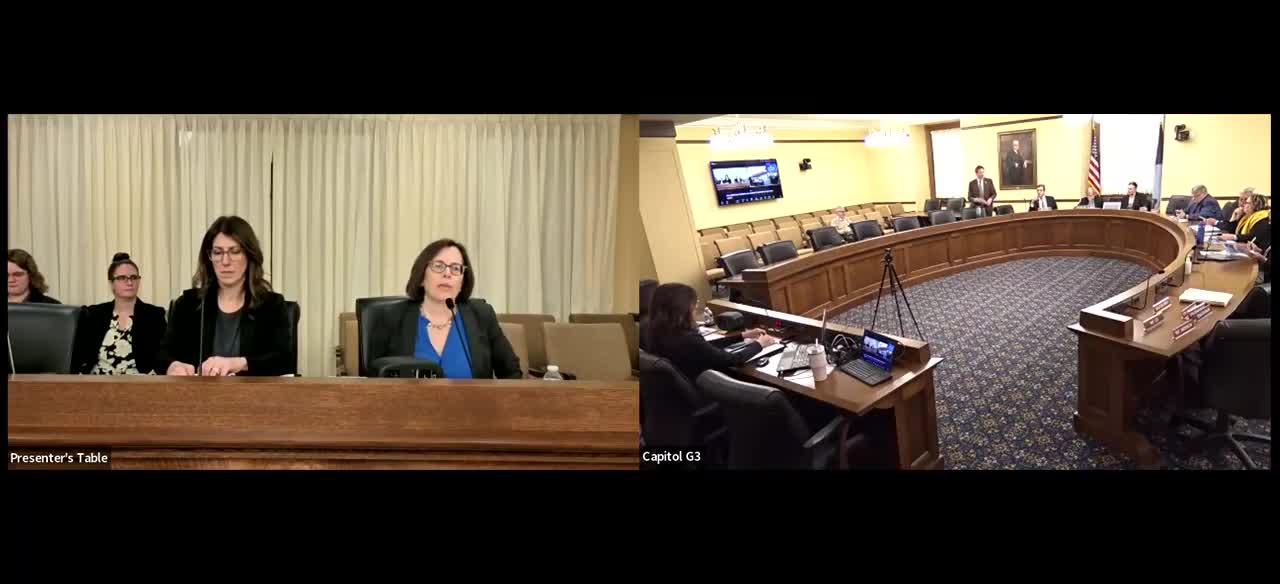
Summary
The Legislative Audit Commission on Thursday heard a performance audit that found the governor and lieutenant governor’s office largely failed to follow internal‑control requirements, leaving the office at increased risk of waste or misappropriation.
The Legislative Audit Commission on Thursday heard a performance audit that found the governor and lieutenant governor’s office largely failed to follow internal‑control requirements, leaving the office at increased risk of waste or misappropriation.
"The office generally did not comply with the criteria we tested because of internal control deficiencies," Judy Randall, legislative auditor, told the commission as she introduced the report. The audit covered July 1, 2022, through Dec. 31, 2024.
Deputy Legislative Auditor Lori Lisonbee said auditors identified 12 findings across receipts, inventory, non‑payroll and payroll expenditures. She told commissioners that one employee had responsibility for purchasing, receiving, paying vendors and recording inventory, noting: "that individual can purchase an item, they can receive that item, they can pay for that item, then they will enter that item into inventory, and they can subsequently go ahead and remove that item for the inventory all without the oversight of anyone else." The auditors recommended segregating incompatible duties or using supervisory reviews as compensating controls.
The auditors reported recurring problems with payments and documentation. Examples cited: purchasing card statements that were paid late in 29 of 30 months sampled; 92 of 208 recurring invoices (rent, IT, cable, phone) paid late, with delays ranging from 1 to 359 days (averaging around a month); and 23 of 41 other vendor invoices paid late. Testing also found inaccuracies in employee reimbursements (14 of 40 samples contained errors) and duplicate payments on state airplane invoices that led to an overpayment the auditors estimated at $7,400 in the samples reviewed.
Lisonbee said documentation supporting many transactions was missing: 40 of 41 sampled vendor payments lacked required support; 16 of 40 employee reimbursements lacked full documentation; and 18 of 49 purchasing‑card statements were missing receipts or itemized support. On events at the governor’s residence, auditors said the office did not collect about $12,000 for seven of nine events, failed to process four deposits totaling more than $3,000, and could not locate documentation supporting roughly $11,000 of $16,000 charged to two state entities.
Several commissioners said the dollar amounts did not appear large but said the pattern of inattention and repeated unresolved findings (four prior findings remained uncorrected) were alarming. "It opens the door, on a bigger level, for the whole state," Representative Jacob said, adding that the problems appear "pervasive and ongoing." Lisonbee and Randall said their work found weaknesses in implementation and oversight rather than evidence of fraud.
The governor’s office acknowledged the findings and described a series of corrective actions. Mary Fee, general counsel and deputy chief of staff, said the office had modernized several processes since the period under audit, moved to electronic timesheets, rolled out electronic expense reimbursement, added finance and HR staff, and implemented tools (DocuSign and related software) to collect and retain receipts and approvals. Fee said some errors stemmed from small‑office staffing and manual processes and that the office had already taken steps to address the auditors’ recommendations.
Commissioners pressed for documentation and transparency about events held at the governor’s residence, asking who signed agreements, who contracted for services, and who ultimately made payments for those events. Auditor Randall said she would follow up; the commission requested the governor’s office provide contracts and invoices for the events that lacked collections.
The commission approved routine minutes from Oct. 14 and adjourned. Randall told commissioners the Office of the Legislative Auditor will release additional reports soon, including a review of statewide use of overtime and shift bonuses and other payroll‑related audits.
What’s next: the commission asked the governor’s office to provide requested event invoices and evidence of any recovery of mispayments; auditors and staff said they will continue to monitor implementation of the 12 recommendations.