
Athens-Clarke County staff recommend 20-step fire pay plan after compensation study
Get AI-powered insights, summaries, and transcripts
Subscribe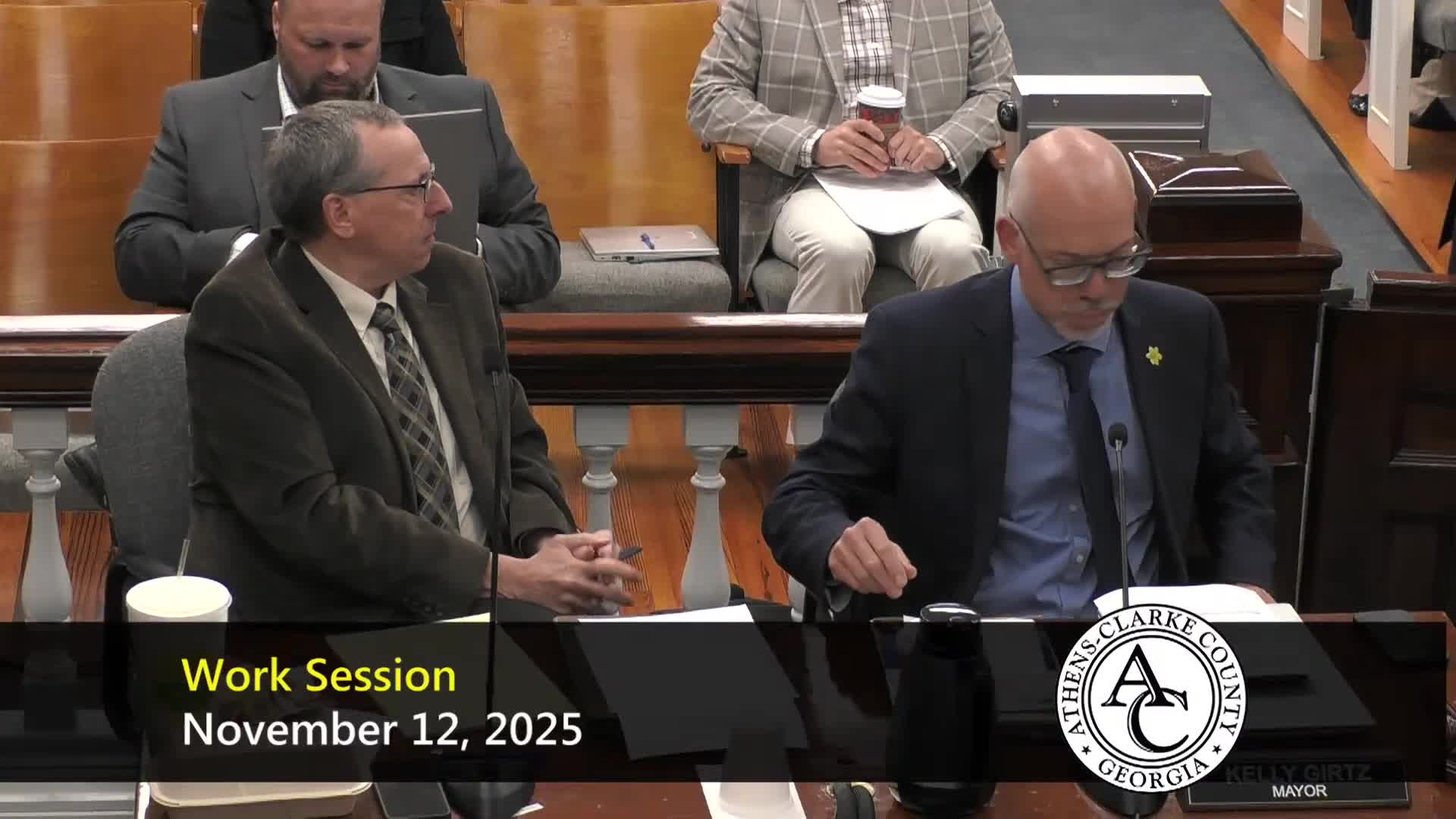
Summary
Consultants reported fire pay ranges lag peer markets and recommended moving to nine grades with 20 steps, widening range spread to 40% and phasing implementation (approx. $687,000) with staff to return with budget details and a December agenda report for a formal vote.
Consultants presenting to the Athens-Clarke County Mayor and Commission on Nov. 12 recommended a redesigned fire pay plan that would expand the department’s step progression from seven steps to 20, increase pay-range spread from 30% to 40% and move minimums to the market average to improve recruitment and retention.
"We're looking at right around $687,000 to implement," Alex Turner, the senior compensation consultant, said, describing the recommended implementation and a plan to phase increases so the cost could be split across two periods if the commission moves forward.
The study covered 174 employees in nine fire classifications and compared Athens-Clarke pay to 18 peer jurisdictions. Consultants reported the department’s pay was about 3% below the market minimum, roughly 12% below the market midpoint and about 18% below the market maximum. To reduce pay compression and avoid cases where recently promoted employees earn more than longer‑tenured peers, the consultants proposed a ‘‘higher‑year parity’’ implementation that ties step placement more closely to years of service.
Fire Chief (name not stated) explained the problem the plan aims to fix: "Every promotion we've had, we have had grievances filed because of that very thing," referring to employees who were leapfrogged in pay after promotions. The consultants said the 20‑step plan—and a standardized 1.79% step increase—would prevent those occurrences and create more frequent, predictable annual movement through steps.
Staff and consultants outlined fiscal impacts and budget options. The consultants estimated the average pay increase would be about $4,000 per employee (roughly a 5.17% average raise) and warned that salary numbers exclude benefits; finance staff said benefits and pension contributions would add roughly 30% to the salary cost. County staff noted the contingency fund (reported at about $961,520 at the meeting) or unallocated fund balance could be used for initial implementation costs if the commission chooses a January start date.
Commissioners asked detailed implementation questions — how to handle laterals, whether EMS certification should affect pay, midpoint timing with more steps, and whether to implement Jan. 1 or align with the July budget cycle. Consultants said lateral hires typically enter at firefighter rank and that some peer communities include EMS pay as incentive or baked into base salary; the study focused on base ranges and did not uniformly capture incentive pay in peers.
Union representatives in the room said membership ratified collective-bargaining actions and highlighted non‑salary benefits secured by bargaining, training and recruitment gains. One union speaker noted membership passed the ratification vote overwhelmingly.
No formal vote was taken at the Nov. 12 work session. Staff said an agenda report would be posted next Tuesday and expected the item to be scheduled for the December voting meeting, where commissioners could vote on adoption and implementation timing. Staff also committed to return with a budget breakdown that includes salary, benefits and pension impacts and to show contingency/fund-balance options.
What comes next: staff will provide a detailed agenda report and budget scenarios for the commission’s December meeting; a final adoption and implementation decision is expected at a subsequent formal vote.