Public Works outlines expanded illegal‑dumping and litter program, Fulton County Schools partnership
Loading...
Summary
Director Jeffrey Reeves presented a multi‑pronged illegal dumping and litter cleanup plan that includes a new coordinator, partnerships with Fulton County Schools, spot cleanups, temporary cameras, signage and a no‑dumping education campaign. Staff reported previous large cleanup costs and asked legal to pursue enforcement avenues to recoup cleanup
Public Works Director Jeffrey Reeves briefed East Point City Council on March 17 about a stepped‑up illegal dumping and litter program aimed at clearing chronic sites, preventing re‑dumping and building youth and school partnerships.
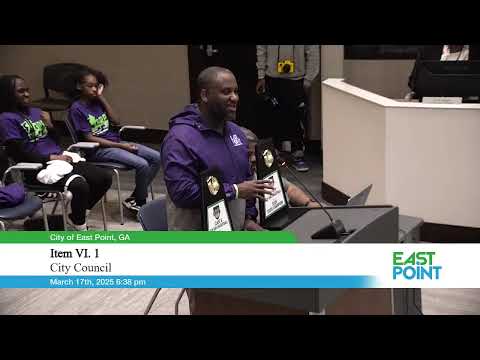
Reeves described a program of 30‑, 60‑ and 90‑day cleanups, an appointed program coordinator in the approved budget, expanded communications and an outreach partnership with Fulton County Schools to bring anti‑litter education and student engagement to seven schools serving East Point. He said staff is working on logos and a marketing theme and plans community cleanup events, recycling drives, adopt‑a‑spot programs and an art contest to raise awareness.
City crews have already cleared multiple persistent dumping locations, Reeves said, illustrating work at West Ferris and Pollard, a path near Piggly Wiggly off South Commerce, and Lyle (off Harris). Reeves showed photos of cleared sites and said crews are using recycled asphalt and bollards to reduce future dumping. He said staff is exploring temporary/mobile camera deployments at hotspots and will increase signage and public education.
Reeves told council that in at least one past cleanup the city spent about $20,000–$30,000 removing tires from a large vacant parcel owned by an out‑of‑state owner, and that in similar cases city crews have been left to pay disposal costs. He asked council to direct Code Enforcement and the City Attorney to pursue fines or liens where feasible to recover cleanup costs when private property owners are responsible.
Council members asked about how much dumping occurs on private property versus public right‑of‑way and whether the city can recover cleanup costs; Reeves said much dumping occurs within city right‑of‑way but that in some cases the city must clear adjacent private parcels and then look to Code Enforcement and legal remedies.
Reeves said the program will include improved notice to residents about active cleanups, use of a mobile litter‑collection unit and greater interdepartmental coordination so city staff can report and respond to problem locations even when residents do not file complaints.
Provenance: - topicintro: excerpt: "Good evening, counsel. Today, I wanted to come to you to provide an update on our 30, 60, 90 day, 1 year, litter and illegal dumping program." (block_id: "5806.895", local_start:0, local_end:80) - topfinish: excerpt: "That was our presentation update for today." (block_id: "6256.815", local_start:0, local_end:60)
sections":{"lede":"Public Works presented a stepped approach to fight illegal dumping and litter on March 17, including a program coordinator, school partnerships, mobile cameras, more signage, spot cleanups and a request for legal enforcement to recoup costs.","nut_graf":"Director Jeffrey Reeves showed photos of cleared dumping sites, outlined a marketing and school partnership plan with Fulton County Schools and said the city may pursue liens or fines where private property owners are responsible for recurring illegal dumping.","ending":"Staff will continue targeted cleanups, pursue temporary camera deployments at hotspots, expand public education and coordinate with Code Enforcement and the City Attorney to seek cost recovery where possible."},"topic_primary":"sanitation","topics":[{"name":"illegal dumping","justification":"Detailed update on cleanups, mobile cameras, school partnerships and enforcement options.","scoring":{"topic_relevance":0.98,