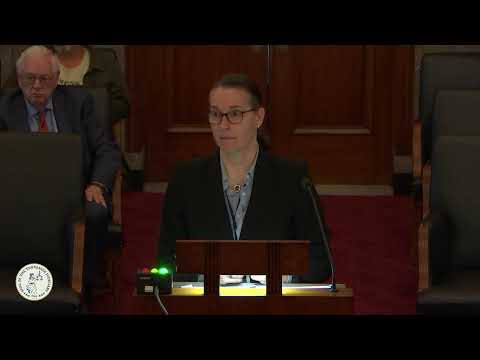
Appellate panel hears challenge to CODIS match after earlier acquittal; defense faults TBI purging procedures
Get AI-powered insights, summaries, and transcripts
SubscribeSummary
An appellate panel heard arguments over whether DNA in a CODIS database—tied to an acquitted 2009 arrest—should have been purged and whether a later match can sustain a conviction; the court took the case under advisement and will issue an opinion.
An appellate panel on [date of argument] heard competing legal arguments over whether DNA retained in the Combined DNA Index System (CODIS) after an acquittal should have been purged and whether a later database match lawfully produced evidence used against the appellant.
Jonathan Turner, counsel for the appellant, told the court the factual record is not in dispute: investigators found a hat at the crime scene, obtained two DNA samples from it, and a CODIS search returned a match to the appellant tied to a 2009 arrest for which the appellant was acquitted in 2012. "The TBI is not maintaining that database properly," Turner argued, saying the record contains no evidence that a subsequent 2017 arrest produced a new DNA sample entered into CODIS that would have independently explained the 2022 match.
Turner pressed that the statutory savings provision cited by the state—referred to in argument as "38 6 1 13"—applies only where a specimen was "obtained or placed in the database by mistake," and therefore does not excuse a failure to purge profiles that should have been removed under the separate purging scheme (cited in argument as "40 35 3 2 1"). He said permitting reliance on a savings statute in those circumstances would remove the incentive for the Tennessee Bureau of Investigation (TBI) to maintain database integrity.
A judge on the panel read the statutory language aloud and questioned whether the savings provision would indeed bar relief if the retained specimen was present through a clerical or administrative mistake. "Detention, arrest, or conviction of a person based upon a database match or database information is not invalid if it is later determined that the specimens or samples were obtained or placed in the database by mistake," the judge summarized during oral argument.
Lacey Wilbur, arguing for the state, replied that the saving statute applies and emphasized that the appellant had been arrested in 2017 for qualifying violent felonies (identified in the record as assault with strangulation and aggravated burglary), which would have put the appellant's DNA in the database regardless of the earlier acquittal. Wilbur also noted testimony from a TBI agent that clerks normally notify TBI about dispositions and that the routine process typically takes about three weeks.
Counsel and the panel discussed the interagency workflow: how court clerks notify disposition to the TBI and whether the TBI cross‑checks NCIC or other court records to purge profiles. Turner contended the record shows no clerk notification in this case and that the TBI agent who testified had no documented record showing the dismissal was transmitted.
Both sides cited recent authority. Counsel discussed Fields (referred to in argument as a recent summer decision) and its procedural posture; the parties disagreed on whether Fields and related post‑conviction rulings resolve the present question about purging and the savings statute. Turner argued the state did not carry the burden of proving a later DNA sample was collected or searched against CODIS, while the state responded that common practice and the 2017 arrest would have left the DNA profile in the system.
The court did not rule from the bench. After questioning and rebuttal, the panel took the matter under advisement and said it would issue a written opinion in due course.
What happens next: the appellate court's written opinion will resolve whether the savings statute bars relief when a profile remains in CODIS after an acquittal and whether the record here supports the state's alternative explanation (a later qualifying arrest).