Get Full Government Meeting Transcripts, Videos, & Alerts Forever!
Get email alerts on the Cemetery Restoration topic
No spam. Unsubscribe anytime.
Commission: Newtown restoration nearly complete; crews documenting repairs and stabilizing top‑heavy monuments
Summary
Contractors told the Nantucket County Cemetery Commission they have cleaned and documented repairs for most stones at Newtown Cemetery and expect to finish roughly 80–90 stones; the commission discussed footing and epoxy techniques for taller brownstone tablets and next steps for monitoring and additional treatments.
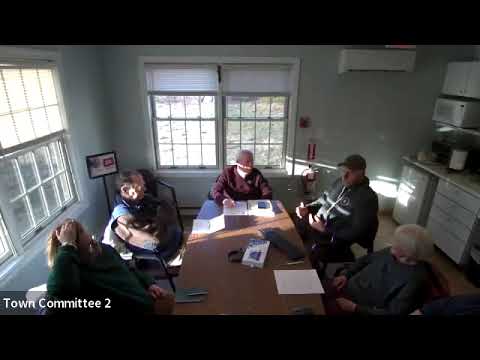
Chair opened the meeting and invited a field report from crews working at the town cemeteries.
"We basically are getting to the end of all of our stores ... we're probably gonna end up with, like, close to 90," John, a member of the field crew, said, summarizing progress at Newtown Cemetery. He said the team is preparing a treatment report the town requires that lists each stone and the work performed — cleaning, resetting, epoxy repairs and, where needed, pointing for hairline fractures.
The report led into a technical discussion of how to stabilize taller, top‑heavy brownstone tablets that had tipped or broken at the base. A field technician described workarounds for century‑old slot bases: "With the epoxies, now we're stronger than the pins," he said, and added the crew sometimes pours and hammers lead around older slots to hold a top piece in place rather than relying on dowels that can allow moisture to force fractures.
Contractors also described cleaning cycles (multiple D/2 applications), stone‑type considerations and tradeoffs. They recommended granite for new memorials where longevity is a priority, noting some granite sources are prone to water staining and freeze‑thaw cracking, and said marble sometimes requires stabilizers to preserve surface integrity. The contractors gave a recent large Somerset memorial as an example of the scope and workmanship the commission might expect on major pieces.
The commission thanked the crews and volunteers and agreed staff would circulate an addendum to the current treatment report in the next two to three weeks with remaining items and follow‑up needs. No formal action was taken beyond accepting the progress report.