Council advances single‑family attached‑dwelling ordinance amid heated neighborhood debate
Loading...
Summary
On first reading the council approved an ordinance adding 'single‑family attached dwellings' to the zoning code, a measure proponents say will expand homeownership options while opponents warned about curb cuts, mortgages, insurance and neighborhood character; vote was 5‑3 with one abstention.
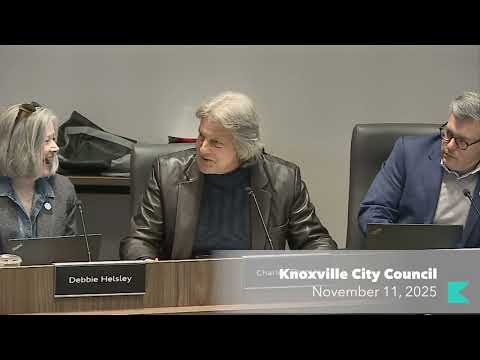
The Knoxville City Council voted on first reading on Nov. 11 to add a new use — "single‑family attached dwellings" — to multiple sections of the city's zoning code, approving the item 5‑3 with one abstention.
Supporters at the meeting said the change will expand homeownership options and help address the city's housing shortage. Kellen Sarles of YES Knoxville said allowing attached homes can modestly increase homeownership opportunities while preserving neighborhood character. "Passing an SFA ordinance would be just that, a baby step toward easing the path to individual homeownership," Sarles said. Hope Ealy urged the council to create housing options suitable for aging residents and single‑person households; architect Aaron Jernigan argued building attached units side‑by‑side can lower per‑unit construction costs relative to very small accessory units.
Opponents cautioned that SFAs differ from duplexes and townhouses and that subdividing attached units onto separate lots creates new curb cuts, driveways and potential maintenance and insurance complications. Larry Silverstein, chair of Community Forum, urged removal of RN1 and RN2 from the ordinance, saying the use is inconsistent with those districts' stated purpose. Chris Treadwell cited local code‑enforcement and finance concerns, including higher administrative costs and potential mortgage limits for small condominiums.
Council discussion centered on design standards more than the use itself. Multiple members — including Reiger, Thomas, Vice Mayor Smith and others — said they want stronger design standards to avoid undesirable frontage and driveway outcomes and suggested returning with a one‑year review if the change is adopted. City planning staff and council members discussed differences between the current code and the pre‑2020 code, peer jurisdictions (Chattanooga, Huntsville, Lawrence), and whether the change should apply to RN1 and RN2.
On roll call Councilwoman Singh, Councilwoman Hoesley, Councilwoman McKenzie, Councilwoman Ryder and Vice Mayor Smith voted yes; Councilwoman Fugate and Councilwoman Roberto voted no; Councilman Thomas announced an abstention. Council members stressed that a second reading and design‑standards conversations remain before final adoption.
The ordinance proceeds to second reading. Staff said they will provide information to council about pathways to add design standards and commit to follow‑up reporting on how the change affects neighborhoods after implementation.