
Planning commission delays decision on Telluride Landworks permit after neighbors cite eagle nest, dust and legal questions
Get AI-powered insights, summaries, and transcripts
Sign Up Free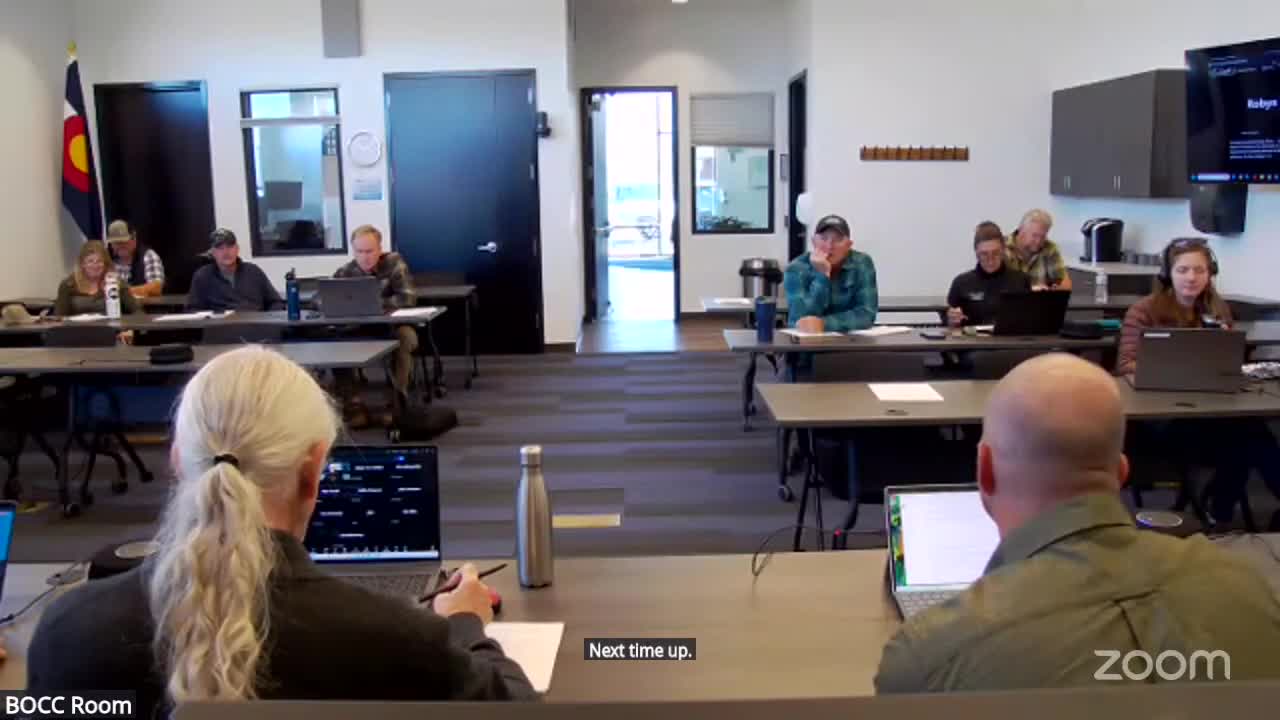
Summary
San Miguel County planners continued a special-use-permit application for Telluride Landworks’ landscaping and storage yard at 795 County Road X45 to Dec. 11 after staff presented 14 recommended conditions and neighbors and experts raised concerns about a nearby bald-eagle nest, dust/noise, stormwater and whether the 30.35-acre parcel qualifies under Wright's Mesa rules.
The San Miguel County Planning Commission on Thursday continued a request from Telluride Landworks for a special‑use permit for a construction‑contractor office and staging area at 795 County Road X45, asking the applicant to supply an updated site plan and asking county attorneys to weigh in on legal questions before the commission decides.
Planning staff told commissioners the 30.35‑acre parcel has long supported nursery and tree‑farm activities and that the applicant seeks to formalize a larger landscaping and materials‑storage operation. Staff said they prepared a recommended motion for approval that would attach 14 conditions, including limits on the approved disturbance area, a development permit before new site work, shielding for exterior lighting, hazardous‑materials containment, dust controls, visual screening and an annual review in December 2026.
"The motion of approval is based upon certain findings and also includes the 14 conditions," planning staff said, summarizing the protections staff believes would make the use acceptable.
Opponents and several commissioners raised concerns about wildlife and neighborhood impacts. Staff and referral agencies reported an active bald‑eagle nest on adjacent property; Colorado Parks and Wildlife and the U.S. Fish and Wildlife Service materials cited in the packet recommend buffers (staff noted a 660‑foot buffer as a useful baseline and recommended minimizing activity from Dec. 1–July 31 while the nest is active). Neighbors said operations have increased in recent years and described dust, debris and prior on‑site burning.
"It's a bad place to be," resident Ken Watts told the commission, describing ash, dust and trash that, he said, have migrated onto his property and contributed to health concerns. Other residents and their planner argued the operation has expanded beyond purely agricultural uses.
Technical and legal questions animated the hearing. A retained land‑use planner for opponents, Chris Hawkins, told commissioners he read the county code and the 1999 BOCC resolution differently than staff, arguing Wright's Mesa requires 35 acres for each principal use and that the 1999 resolution did not waive that standard. "This doesn't meet that standard," Hawkins said, urging the county attorney to clarify whether the parcel's substandard size limits the county to single‑family or agricultural permits only.
The applicant, owner Matt Alperman, said Telluride Landworks employs about 65 people in the county, serves roughly 300 clients and did not intend to expand the footprint of disturbance. Alperman described steps the company has taken — moving some piles away from property lines, improved housekeeping, use of a large dumpster, and commitments to screening and dust suppression — and said he is willing to work with staff and CPW to protect the eagle nest.
Commissioners and referral staff probed operational details: staff reported a code enforcement complaint filed in April 2025 and a notice of violation sent to the owner in June 2025; the packet showed the application was posted online 08/28/2025. Planning staff also relayed equipment and material counts seen on the site visit (staff noted about 2–4 employees on site daily for the yard, several pieces of heavy equipment, around 6 truck‑mounted plows and multiple trailers) and described that pond capacity was roughly 7.5 acre‑feet and that the applicant had identified water sources that might be used for dust control.
Opponents asked for stricter measures if the permit moves forward: a half‑mile seasonal buffer for eagle protection, a publicly reviewed screening plan rather than staff‑level approval, a stormwater management plan, larger property‑line setbacks (they suggested 50 feet instead of 20), limits on daily truck trips, pile‑size limits, noise limits, mandatory dust‑control measures, a prohibition on on‑site processing (chipping/topsoil production), and, if approval is not warranted, a stop‑work order for non‑agricultural activities.
Commissioners said they wanted clearer evidence and commitments before voting to approve. One commissioner moved to continue the application to the planning commission's Dec. 11 meeting and to request an updated site plan responsive to the discussion plus formal input from the county attorney on the 1999 resolution and lot‑size questions. The motion also asked the applicant to consider moving storage and operations away from the eagle nest and neighbors "as far as practicable." The commission approved the continuance by voice vote.
Staff said the continuance will include a site visit in Telluride and urged revised materials be submitted in advance so commissioners and staff can review them before the December meeting. The item will return to the commission on Dec. 11 with the requested materials and any legal analysis.
What happens next: the applicant may submit a revised site plan and the county will seek attorney guidance on legal interpretations cited by opponents. The commission left in place a direction that major material movements be limited while the application is pending and asked staff to work with the applicant on clear expectations for any interim activity.