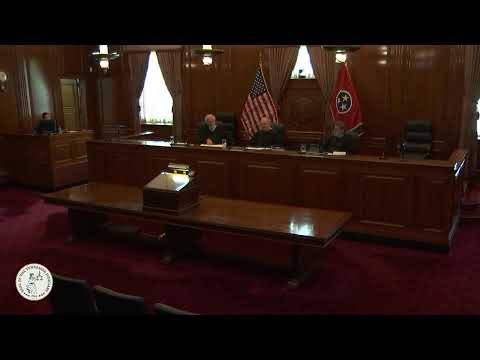
State urges appeals court to reclassify patronizing-prostitution charge as felony; defense says plea relied on misdemeanor limitation

State appellate court (panel) ยท November 13, 2025

Get AI-powered insights, summaries, and transcripts

Subscribe
AI-Generated Content: All content on this page was generated by AI to highlight key points from the meeting. For complete details and context, we recommend watching the full video. so we can fix them.

Summary

At an appellate oral argument, the state asked the court to reverse a trial court's ruling that treated patronizing prostitution from an officer posing as a minor as a misdemeanor, arguing the statute incorporates trafficking penalties. The defense said the defendant pleaded and relied on the trial court's memorandum limiting punishment to a classA

At an appellate oral argument, Alan Groves, counsel for the state, told the court the trial court wrongly treated patronizing prostitution from a law-enforcement officer posing as a minor as a class A misdemeanor rather than a felony. "This is a straightforward sentencing case," Groves said, arguing the statute's text and structure incorporate the trafficking statute and therefore impose felony grading.

Groves asked the court to reverse the trial court's judgment and remand for resentencing, citing the statutory provision (39-13-5-14, subsection b(3)(a)) and the trafficking statute the provision references (39-13-3-09). He told the panel the statute's history supports that reading: a 2011 enhancement provision set prior aggravated versions as felonies, a 2014 amendment changed the language to "is punishable as" trafficking, a 2019 provision clarified that an officer posing as a minor can constitute patronizing prostitution, and a 2022 amendment, the state said, fixed a prior gap noted in the Ashley decision (2013).

"We think this text clearly and unambiguously imposes felony punishment for this offense by incorporating 39-13-3-09," Groves said. He repeated that under the trafficking statute the offense is at minimum a class B felony and urged the court to harmonize the two provisions rather than apply the rule of lenity.

Venus Snyder, counsel for defendant Mister Gooch, disputed the state's posture and emphasized the plea and the trial court's memorandum order. Snyder said the defendant filed a petition asking the court to accept his guilty plea and that the trial court denied a motion to dismiss but issued a memorandum limiting the state's ability to prosecute him to a class A misdemeanor. "How can you have a knowing voluntary guilty plea to a B felony if the court told you it's only gonna be a misdemeanor?" Snyder asked, arguing the conviction can only be for what appears in the plea papers and the judgment the court accepted.

The justices pressed both sides on mechanics and notice. One judge (identified in argument as Judge Montgomery) asked whether the plea proceedings or plea paperwork set out the level of offense and whether the defendant was put on notice that the state treated the charge as a felony. Groves replied the plea was open and that the state consistently informed the court and defendant it was prosecuting the charge as a felony; he said the state proceeded to a final judgment so it could preserve appellate review under the Sentencing Act rather than seek interlocutory relief.

Counsel debated whether the phrase "punishable as [trafficking]" alters the class-of-offense language in the statute or instead addresses only the manner of punishment. Snyder told the court the trial judge found an internal inconsistency and limited the state's exposure accordingly; Groves argued the plain text and legislative history show the legislature intended felony punishment for the officer-posing-as-minor scenario.

The panel took the case under advisement after argument. The court did not issue a ruling from the bench. If the appeals court rules for the state, the case would be remanded for resentencing; Groves noted the defendant could seek to withdraw the plea or pursue post-conviction relief if resentencing were imposed. If the court affirms the trial court's interpretation, the judgment and misdemeanor classification would stand.

Authorities cited at argument included statute 39-13-5-14 (patronizing prostitution), the trafficking statute cited by counsel (39-13-3-09), reference to the Ashley decision (2013), and procedural references to the Sentencing Act and Rule 9 regarding interlocutory review. The court took the matter under advisement and called the next case.