Tennessee appellate panel hears challenge after juror failed to disclose past ties to prosecutors in Claiborne case
Loading...
Summary
Appellant counsel argued a jury foreperson failed to disclose prior work and relationships with law‑enforcement witnesses, creating a presumption of bias and warranting a new trial; the state countered that voir‑dire questions were general and the post‑conviction court credited the juror’s testimony. The panel took the matter under advisement.
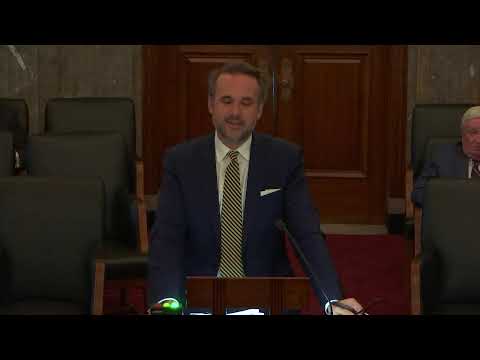
At an appellate hearing, Evan Wright, counsel for appellant Ronnie Claiborne, urged a Tennessee panel to grant a new trial on the ground that the jury foreperson failed to disclose prior employment with the prosecuting agency and prior relationships with law‑enforcement witnesses.
Wright told the court the nondisclosure undermines the defendant’s constitutional right to an impartial jury and argued that Tennessee precedent creates a presumption of bias when a juror conceals material information during voir dire. "The Tennessee Constitution guarantees every accused a trial by a jury free of disqualification on account of some bias or partiality," Wright said, adding that a defendant has "an absolute right to examine prospective jurors." He said the juror, Mr. Watson, had served in various roles with the county sheriff's office and later "admitted in the post‑conviction hearing that he had conversed with these witnesses before."
Why it matters: If a court finds that a juror willfully withheld relevant background that would have allowed counsel to exercise challenges intelligently, case law can require reversal or a new trial. Wright relied on multiple Tennessee decisions, including Akins, Durham, and Hyatt, to argue that failure to disclose creates a legal presumption that the juror's partiality affected the verdict.
Facts and competing accounts: According to the record described at argument, Watson had prior service with the Fentress County Sheriff's Department: one year as a full‑time deputy, two years part time, and five years as a dispatcher, with much of that service occurring roughly 15 years before the charged offense. The defense says Watson also admitted knowing and conversing with two law‑enforcement witnesses, Detective Jason Duncan and Officer Anthony Gunner.
The state, represented by Ben Ball, countered that the pertinent voir‑dire questions were general and reasonably framed to explore jurors' attitudes toward law enforcement in the 2020 climate. "Mr. Watson reasonably understood this as a question of whether he had a problem with law enforcement, not whether he had ever been a member of law enforcement," Ball told the court, arguing that the defense had not identified specific voir‑dire questions that should have compelled a disclosure of prior employment. Ball said the post‑conviction court credited Watson’s testimony that he "knew of them" but did not know the witnesses in a way that should have disqualified him.
Rebuttal and context: In rebuttal Wright emphasized that Watson changed his account multiple times at the post‑conviction hearing and that his later admissions — that he "actually knew them" and "conversed with them on different occasions" — undermined the post‑conviction court’s finding. Wright additionally told the panel that the trial court judge, Judge Sexton, had acknowledged the original case "could have gone either way," which Wright said heightened the risk that a nondisclosing juror affected the outcome.
What the court will decide next: The panel took the matter under advisement and recessed. "We'll get this case out in the next few weeks," a member of the court said. The court’s forthcoming opinion will decide whether the post‑conviction court erred in finding that the petitioner failed to meet his burden to trigger the presumption of bias and whether relief is required.