Get Full Government Meeting Transcripts, Videos, & Alerts Forever!
Get email alerts on the Drug Trends topic
No spam. Unsubscribe anytime.
Overland Park police brief committee on fentanyl, kratom derivatives and convenience‑store THC products
Summary
Overland Park Special Investigations Unit told the Public Safety Committee about shifting local drug trends — from powdered fentanyl and adulterated stimulants to synthetic kratom derivatives marketed at gas stations — and staff outlined education, enforcement and possible local ordinances following a large fentanyl seizure.
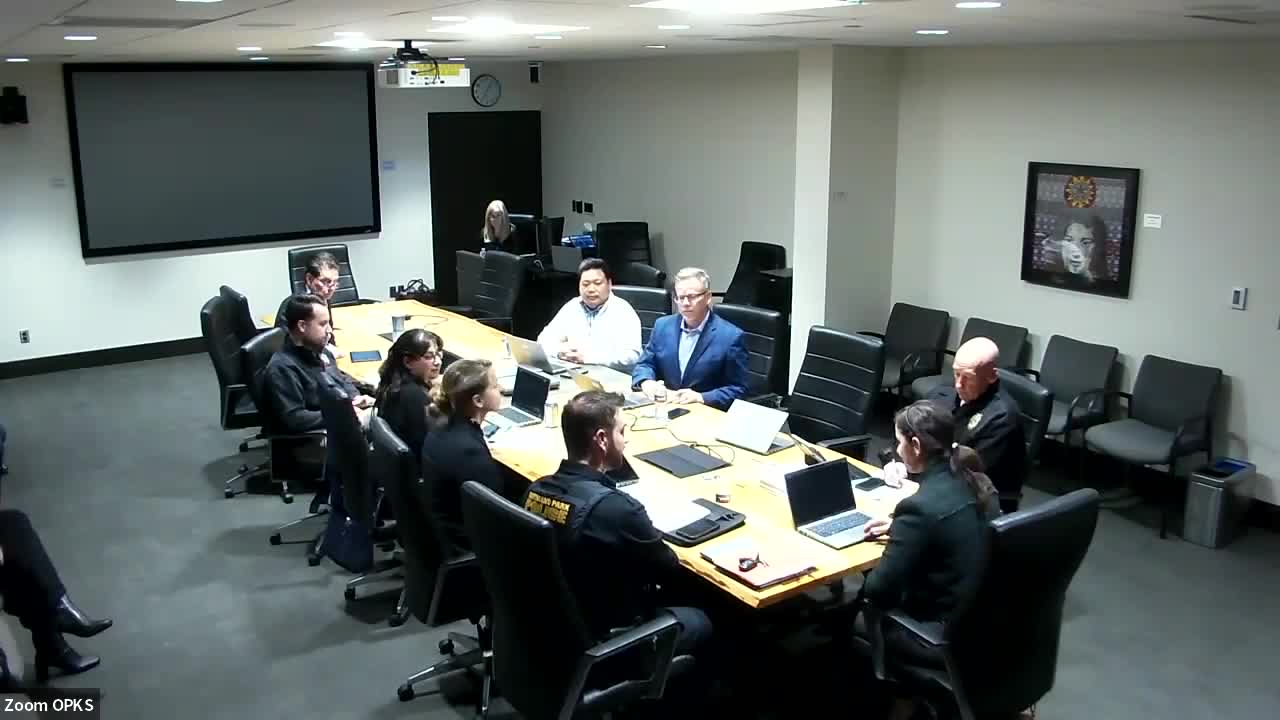
At a Public Safety Committee meeting on Nov. 7, Overland Park police presented a detailed briefing on changing local drug trends and enforcement priorities, warning that new and unregulated products are appearing in convenience stores and smoke shops across the Kansas City metro.
Captain Twaddle, who leads the department's Special Investigations Unit (SIU), told the committee the unit’s mission is to "reduce the availability of the drugs in the community" through intelligence‑driven investigations, regional partnerships, prevention and education. He described SIU’s staffing and said the unit treats narcotics and co‑occurring crimes such as weapons and auto theft as linked enforcement priorities.
Detective Brute described a national and regional shift in how fentanyl appears on the street — from pressed counterfeit pills to powder fentanyl — and said the department is also seeing stimulants such as cocaine and methamphetamine adulterated with fentanyl. He noted a recent local seizure of roughly 9 pounds of fentanyl and told the committee, "that's about enough to kill 2,000,000 people," illustrating the scale of the haul reported to the committee.
Staff reviewed other local trends: marijuana remains the most commonly encountered illicit drug in the city (possession remains illegal under Kansas law), THC concentrates and edible products are increasingly encountered, and conversion laboratories for methamphetamine are now more common than small meth labs. The department cited four state lab seizures in 2024 and said prosecutions under Kansas' "distribution leading to death or serious bodily harm" statute have been pursued in eight Overland Park cases since 2019, with recent sentences in the range of about 144 to 220 months in prison.
On the policy front, presenters said House Bill 2,230 (introduced by Rep. Alan Rebus) sought a statewide ban on certain THC/kratom‑related products but did not pass this session. City staff said they are "exploring different options" for a municipal ordinance that could ban the commercial sale of THC and synthetic kratom/7‑OH products at convenience stores, while noting current enforcement will begin with education and outreach because the district attorney's office has indicated reluctance to pursue charges in some cases. Staff added they are working with the Johnson County crime lab to ensure testing capability for any products targeted by local rules.
The SIU team also explained how the city’s public crime map is populated — mostly by patrol encounters that result in reports — and cautioned that it does not show intelligence‑led investigations.
Committee members pressed the panel on school impacts and prevention. Staff said there is no district‑wide mandatory curriculum; school‑resource officers deliver presentations on request (for example, Red Ribbon Week) and the city distributes naloxone (Narcan) and offers peer‑coach programs and short‑ and long‑term supports through the Overland Park Crisis Action Team. Presenters urged residents to call 911 during suspected overdoses and said Good Samaritan protections reduce the risk of possession charges for callers seeking help.
The committee did not vote on legislative action; staff recommended an education‑first approach while they explore the legal and testing capacity needed to pursue a municipal commercial‑sale ban.
What happens next: staff said they will continue outreach to businesses and work with county partners on testing capability and education; any ordinance would be an early‑stage proposal requiring further legal review and council action.