Get Full Government Meeting Transcripts, Videos, & Alerts Forever!
Get email alerts on the Evidence Rules topic
No spam. Unsubscribe anytime.
Tennessee Supreme Court Hears Appeal Over Admission of Prior-shooting and Gang Evidence in Devonte Hill Conviction
Summary
At oral argument, defense counsel asked the Tennessee Supreme Court to reverse Devonte Hill’s murder conviction, arguing the trial judge wrongly let the state introduce an unrelated prior shooting and Hill’s alleged gang membership; the state urged affirmance and the court took the case under advisement.
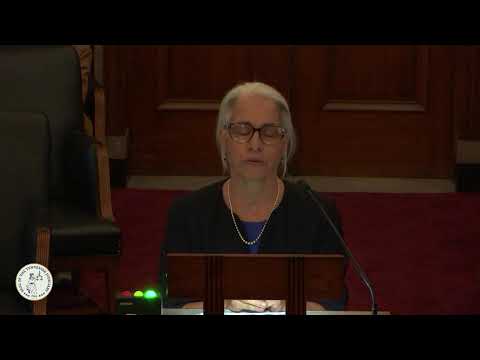
Emma Ray Tennant, counsel for appellant Devonte Hill, urged the Tennessee Supreme Court to reverse his conviction and remand for a new trial, arguing that two evidentiary rulings at trial were reversible error.
Tennant, of the Nashville Public Defender’s Office, told the court the record contains eight issues on appeal but asked the justices to focus on (1) the trial court’s decision to allow testimony about an unrelated prior shooting after finding Hill had "opened the door," and (2) the introduction of evidence of Hill’s alleged gang membership. "He did not say he did not know that," Tennant said, arguing the defendant’s repeated statements on direct—"I wasn't thinking"—were taken out of context and did not reasonably mislead the jury into thinking Hill claimed he lacked knowledge that firing a gun could hurt someone.
Tennant pointed to the record to show context: she said the jury had already heard evidence the defendant searched for the incident on his phone and other testimony suggesting he knew his actions were dangerous. She argued the prior-shooting testimony, which had been ruled inadmissible before trial, nonetheless was allowed in a manner that made it substantive evidence the state later used in closing to suggest guilty knowledge.
On the gang-evidence issue, Tennant said the trial court relied on Rule 403 rather than the stricter Rule 404(b) balancing required for character/propensity evidence. She argued the state offered alternative, less prejudicial proofs of the factual matters the evidence was meant to show (friendship and why the defendant initially misidentified a codefendant), and that the probative value of gang affiliation was low compared with its prejudicial effect.
Ronald Coleman, appearing for the state, asked the court to affirm the trial judgments. He summarized the factual record the state says is overwhelming: on Dec. 3, 2020, the defendant shot and killed Caitlin Kaufman while riding in a car on Interstate 440, officers recovered 9 mm shell casings, and a friend later told police Hill had confessed and given the murder weapon. Coleman said the trial judge heard live testimony and saw juror reactions and therefore reasonably concluded Hill’s comment—"I should have known"—could be interpreted as implying he did not appreciate the danger at the time, which permitted limited inquiry on cross-examination.
Coleman also defended the trial court’s 404(b) process, saying the judge held the required in-camera hearing and found a non-propensity purpose (to show the relationship between Hill and a co-defendant and to explain inconsistent statements to police). He cited State v. March and urged the court to find the trial court substantially complied with the rule. The state further argued that even if the court erred, any error was harmless because Hill admitted at trial that he fired the shots that killed Kaufman.
A judge asked clarifying questions about the defendant’s age at the time of an earlier juvenile incident and about what the jury had heard before Hill testified. Counsel agreed that the prior matter involved a juvenile adjudication and that the jury had heard a friend’s testimony implicating the defendant. The bench concluded by thanking counsel and saying it would take the matter under advisement and issue a decision in a few months.
The court did not announce a ruling at the hearing; the parties requested competing outcomes—defense asked for reversal and remand, the state asked for affirmance—and the court took the appeal under advisement.