
Bridge team pitches $150M phased P3 for William Penn, says district funding not required
Get AI-powered insights, summaries, and transcripts
Subscribe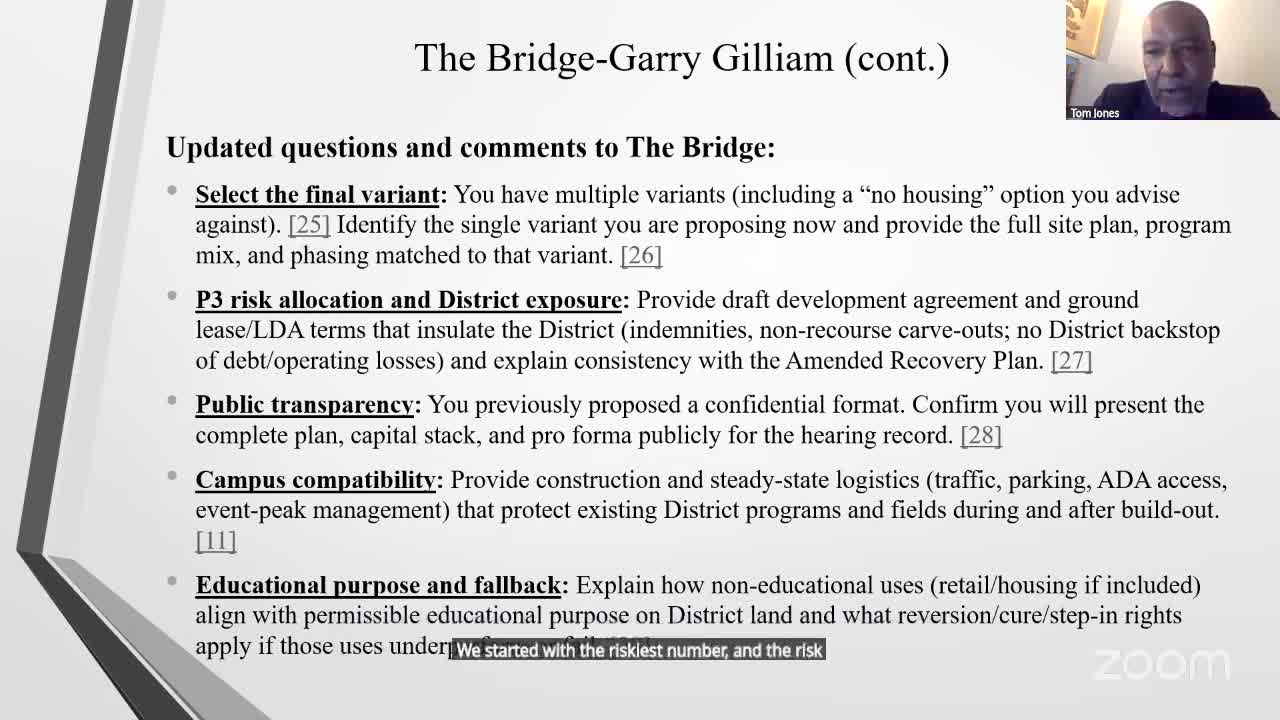
Summary
The Bridge (Gary Gilliam) told the Harrisburg board it seeks to redevelop William Penn into a mixed‑use P3 anchored by housing and revenue-generating uses, estimating an all-in cost near $150 million and saying the plan would not ask the district for direct funding.
The Bridge development team presented its mixed‑use, public‑private partnership concept for the William Penn property at the Nov. 13 Harrisburg City School District special meeting, telling the board the model relies on phased private equity, syndicated financing and programmatic anchors rather than direct district capital.
Lead presenter Gary Gilliam and co‑developer Tom Jones said the group’s preferred variant would include 144 residential units (apartments and townhomes), vocational and maker spaces, sports facilities and community programming. Jones described a capital stack that the team said can be assembled through private equity, lending partners and grants and said earlier term sheets totaled about $10 million in seed commitments. The team estimated an all‑in capital requirement of roughly $150,000,000 but said final numbers would be refined in detailed pro formas after a selection and negotiation phase.
On the key question of risk, Bridge representatives said they could secure rate locks and use a construction manager‑at‑risk under a guaranteed maximum price to limit scope creep. "We would sign up for and get into a rate lock," Tom Jones said, adding the team had discussions with prospective lenders and general contractors to improve investor confidence.
Board members repeatedly asked what guarantees would protect the district if a partner failed mid‑project; the Bridge team replied that it would provide audited financials and guarantor information after a decision and—where appropriate—enter confidential negotiations to disclose lender commitments. The presenters acknowledged some elements are sensitive and requested exclusivity during final underwriting to protect competitive information.
No financial commitments or legally binding guarantees were exchanged at the hearing. The board requested the Bridge provide refreshed pro formas, names of equity and debt participants, and explanations of any conditions under which the district would retain title.