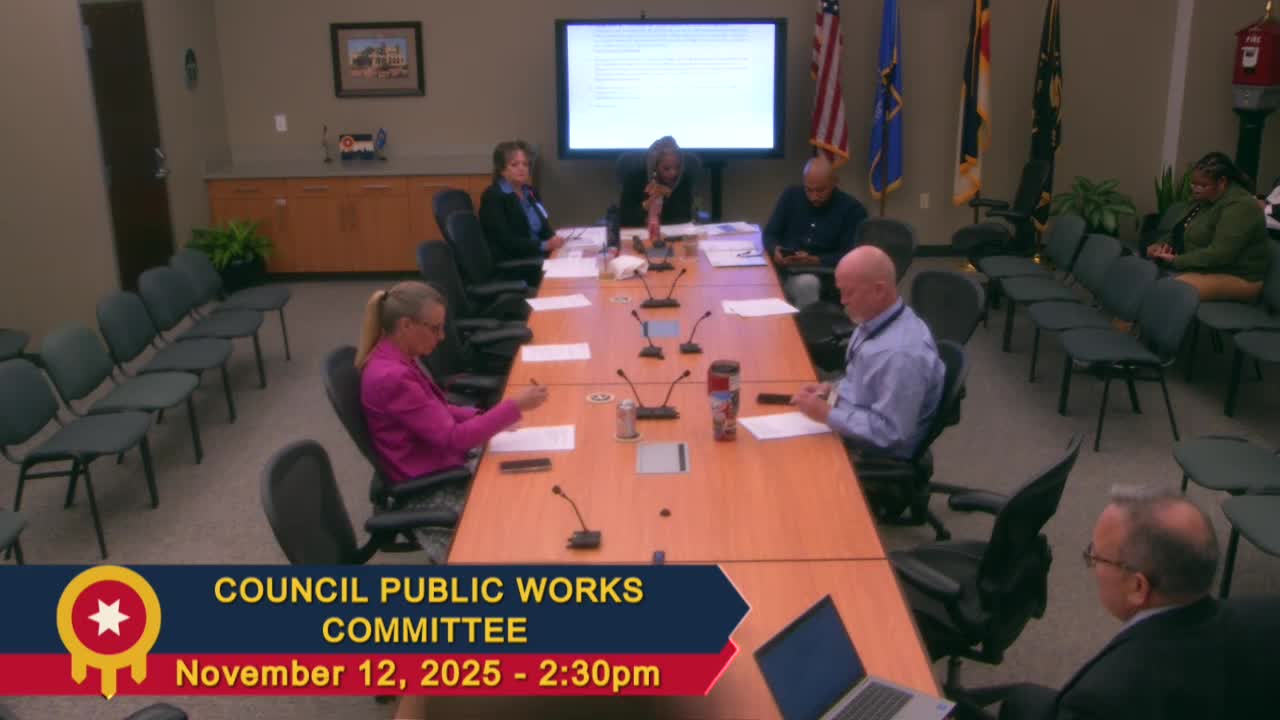
Mayor’s office outlines timeline for mass graves investigation; forensic team reports identifications
Loading...
Summary
City officials told the Public Works Committee the 1921 Race Massacre mass graves investigation completed a field season in late October–early November and has moved remains to lab work; forensic lead said the team has identified C.L. Daniels and others and will continue laboratory and genealogy analysis before broader public reporting.
The mayor’s deputy chief of staff told the Tulsa Public Works Committee that the administration is committed to the ongoing investigation of mass graves related to the 1921 Race Massacre and outlined a two‑part cadence of updates tied to fieldwork and commemoration seasons.
“We have a commitment in this administration to the Graves investigation,” the deputy chief of staff said, adding the recent field season ran from late October into early November and that laboratory analysis and DNA sequencing follow the excavations.
Dr. Stubblefield, the lead forensic anthropologist on the project, told the committee the team has made concrete identifications and family connections. “We have the identification of C L Daniels,” Dr. Stubblefield said, and the team “hope[s] to get him returned to his family.” She also said the season recovered remains consistent with two gunshot‑wound victims and that genealogy work remains to be completed.
Committee members and community volunteers pressed staff about public engagement and institutional memory. Several speakers said past oversight structures had lapsed and urged that the new process include descendant communities. One volunteer referenced earlier decisions about ceremonial practice, including what flag is used during removals, and asked that descendants have a say.
Officials said the Beyond Apology Commission will be the primary public body for ongoing engagement and that the administration will present updates to that commission at least twice a year and to the council as needed. Staff estimated a written summary of the most recent field work would be available in late Q1 or early Q2, with a larger public report and commemoration planned for the June season.
No new policy decisions or votes were taken at the committee meeting. The deputy chief of staff and forensic lead emphasized the multi‑step nature of the work — excavation, laboratory analysis including DNA, and genealogy — and cautioned that identifications and family notifications will take additional time.
Next steps: staff said they will continue lab work, complete genetic and genealogical analysis, and provide the committee and the Beyond Apology Commission with updates on a roughly quarterly basis tied to field and commemoration seasons.