
Legislative subcommittee reviews OLA audit that flags $367M overtime, $37M shift bonuses and agency recordkeeping gaps
Get AI-powered insights, summaries, and transcripts
Sign Up Free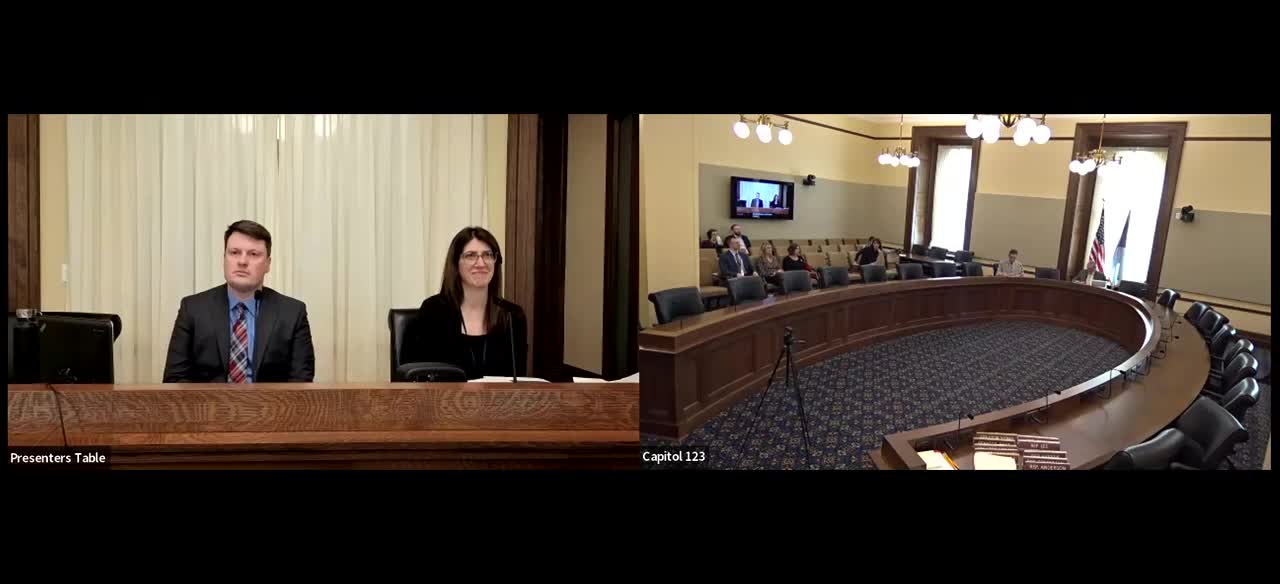
Summary
The Office of Legislative Auditor told a finance subcommittee that Minnesota paid about $367 million in overtime and $37 million in shift bonuses from July 2022—12/2024, found seven findings across five agencies and identified $6.6 million in DHS shift bonuses paid after a programs expiration; agencies said they accept the findings and will recoup overpayments and strengthen controls.
The Legislative Audit subcommittee on the finance committee reviewed an Office of Legislative Auditor performance audit of statewide overtime and shift-bonus pay that covered July 1, 2022, through Dec. 31, 2024. Audit Director Jordan Bionfold told members the state paid about $15.7 billion in payroll during that period, of which roughly $367 million (about 2%) was overtime and about $37 million was paid as shift bonuses.
Bionfold said the audit focused on five agencies that accounted for the greatest overtime spending: the Departments of Human Services, Corrections, Transportation (MnDOT), Public Safety (DPS) and Natural Resources (DNR). Those five agencies paid about $300 million in overtime during the audit period, roughly 82% of statewide overtime, and DHS and Corrections accounted for about $35 million in shift bonuses, about 94% of the statewide total.
The audit identified seven findings. Five findings related to overtime and compensatory-time calculations: in each of the five audited departments auditors found instances where overtime was not always calculated accurately or supporting documentation was not retained. "Generally, the incorrect calculations were relatively small," Bionfold said, but the errors affected some employees across agencies. The audit also highlighted large individual outsized payments: several employees earned more than $200,000 in overtime over the 2.5-year period, and the audit identified more than 200 employees who earned six-figure overtime totals.
Two findings related to shift-bonus plans. Bionfold said both DHS and Corrections negotiated memorandums of understanding with unions that allowed agencies to create shift-incentive programs subject to Minnesota Management and Budget (MMB) approval and departmental policies. DHSs program offered $100 or $200 per unfilled shift depending on the applicable employment agreement; the audit found DHS did not retain MMBs approval documentation for the specific program, did not set an end date tied to the employment agreement, and continued paying about $6.6 million after the program had expired without documented additional MMB authorization. "We did not identify any fraudulent payments," Bionfold told the committee, describing the primary problems as documentation gaps and misunderstandings about the scope of authorization after the 2023to25 agreements took effect.
For Corrections, auditors found a program negotiated with AFSCME that paid $50 for shift pickups under four hours and $100 for pickups over four hours. The audit identified 172 Corrections employees who received significant shift bonuses and found Corrections paid about $13,000 after the program ended and $1,100 to four employees who were not covered by the AFSCME agreement and therefore were not eligible.
Committee members asked whether errors amounted to intentional fraud. Representative Jacobs and others raised that possibility; Bionfold said the audit did not find fraud. "We did not identify any fraudulent payments," he said, and added auditors did not perform forensic-level testing of intent.
Members also asked whether the audit tracked funding sources for the bonuses and overtime. Bionfold said the audit did not analyze funding sources for DHS and most agencies; a footnote in the report shows Corrections initially used federal funding for its bonuses and later moved the costs to general-fund appropriations. Agencies and agency representatives answered questions from the committee about causes and next steps.
Agency responses and corrective steps
- Department of Corrections: Deputy Commissioner Safia Khan said DOC accepts the findings and has strengthened internal payroll controls, retrained supervisory staff and formalized approval pathways with MMB. "We are committed to transparency, accountability and continuous improvement in this area," Khan said.
- Department of Human Services / Direct Care & Treatment: Connie Jones said DHS and DCT generally complied with overtime requirements but agreed with the findings and will address identified issues through manager training and payroll accuracy work. Jones said the department is exploring time-and-attendance systems and other tools to reduce errors.
- Department of Natural Resources: Assistant Commissioner Bob Meyer concurred with the findings, said DNR will recover identified overpayments and strengthen internal controls, and set a corrective-action completion date of March 1, 2026.
- Department of Public Safety: Commissioner Bob Jacobson said DPS generally complied with tested criteria but had some overpayments. DPS has implemented a payroll checklist, timekeeper training and a tracking process for overpayments and will work with employees and unions to recover erroneous payments.
- MnDOT: Commissioner Nancy Daubenberger said MnDOT paid about $30.9 million in overtime and $24.4 million in earned comp time (totaling $55.3 million) during the audit period, agrees with the OLA recommendations, and has increased supervisor training and reporting to better monitor overtime eligibility.
What happens next
Committee members pressed agencies on recoupment plans and timelines. Agencies said they will seek to recover identified overpayments and are implementing or expanding training, payroll controls and related systems; some recovery plans and the exact funding sources for certain payments were described as unresolved or "deferred" to agency follow-up. The committee did not take formal action; the record shows the OLA report (including exhibit references) as the basis for the discussion and agenciescommitments to follow up. The subcommittee adjourned after agency testimony and questions.
Context and limitations
Bionfold and Lisen stressed the audit examined compliance with overtime and shift-bonus criteria and that auditors did not perform a forensic review of intent. Members asked about site-level drivers (for example, direct-care staffing at AMRTC and staffing at Stillwater Correctional Facility) and about whether overtime could be reduced by shifting personnel; auditors pointed to the site-level analysis in the report and officials said some overtime stems from unavoidable, in-person duties (corrections, direct care, field work) and seasonal needs (e.g., snow/ice operations, hunting season enforcement). The OLA noted some data limitations in scope, including that funding-source analysis for DHS was not completed in the report.
The audit and the agenciesresponses will inform continuing oversight and possible budgetary or administrative follow-ups by the committee and Minnesota Management and Budget. The subcommittee adjourned without taking formal votes on legislation or motions.