Grass Valley council approves paid-parking pilot in three downtown lots
Loading...
Summary
Grass Valley’s City Council voted to implement a paid-parking pilot in three downtown lots (Pioneer Village, South Church and Union Square), authorize one additional police officer to administer the program, set rates and hours, and require a one-year oversight review.
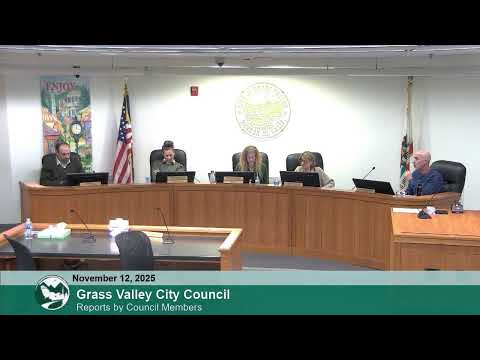
The Grass Valley City Council voted on Nov. 12 to implement a paid-parking pilot in three downtown municipal lots — Pioneer Village, South Church and Union Square — and to authorize staffing and oversight to support enforcement.
City staff recommended the pilot as a means to increase turnover in high-demand spaces, fund parking enforcement and provide more visible public-safety resources in the downtown core. Police Chief Alex Gamelgaard told the council that the three lots together account for roughly 161 off-street spaces in the downtown inventory and that the downtown area contains about 512 total on- and off-street spaces. He said the proposed schedule would apply Monday–Saturday, 8 a.m.–6 p.m., with a rate of $1 for the first two hours and $2 per hour thereafter.
Joy Porter of the Grass Valley Downtown Association and Barbara Baschel of the Chamber’s Community Affairs Committee summarized merchant outreach and surveys; Baschel said about 60% of merchant respondents supported limited paid parking if the fees were used for downtown parking improvements and enforcement. “There’s high support for a parking ambassador or officer in the downtown core,” Baschel said during the presentation.
Supporters and opponents offered competing views during the public-comment period. Lily Robertson, who owns Yuba Blue, said paid parking would create turnover that benefits merchants and would not prevent customers from using nearby free street parking: “By creating turnover in the highly desirable spots ... the choice spots will be freed for customers who come to spend money in all of the downtown establishments.” By contrast, Paula Newman, who operates a Mill Street restaurant, warned that even small fees could deter shoppers and erode downtown’s appeal: “Paid parking takes that away ... It punishes us, the local businesses that are at the backbone of downtown.”
Council members sought details about staffing and the program’s financial outlook. Staff said the program is intended to be financially self-sustaining; at an estimated 40% occupancy of paid spaces the program could generate roughly $100,000 in additional revenue, with higher receipts if occupancy approaches 60%. Staff proposed using revenues to fund a dedicated police presence (an additional officer), parking-related improvements, and program administration. The council asked for safeguards for employees and lower-wage workers; one councilmember requested a need-based waiver option for employee permits.
Councilmember Ivy moved to adopt the pilot, including authorizing the police department to add one officer position, directing staff to make necessary budget adjustments, and requesting an annual oversight report and a need-based waiver policy for employees. Councilmember Jan seconded the motion. The council approved the measure by voice vote with no recorded opposition.
The council instructed staff to return with implementation details, including permit and validation mechanics, signage, and an oversight review approximately one year after program launch.