Get Full Government Meeting Transcripts, Videos, & Alerts Forever!
Get email alerts on the Procurement topic
No spam. Unsubscribe anytime.
Hemet council delays approval of office cubicle/cabling contract after council member objects to $27,000 Cat6 quote
Summary
Council pulled an item to authorize supplemental appropriation for a cubicle and cabling project after Council member Mills called a $27,000 charge to run Cat6 cable "outrageous"; staff said prevailing-wage rules and cooperative procurement explained the price and the council voted to bring the item back for additional bids on Dec. 9, 2025.
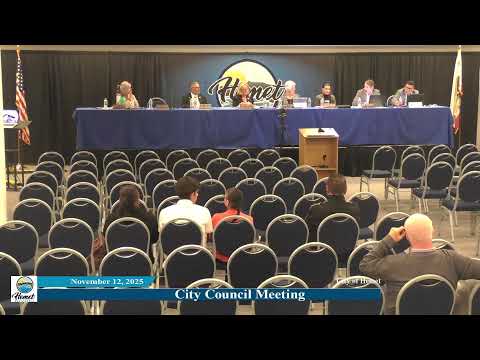
A disagreement over a facilities procurement item led the Hemet City Council on Nov. 12 to delay action on an administrative-services request to authorize a supplemental appropriation for office cubicle replacements and associated cabling.
Council member Mills objected strongly to an additional $27,000 quote to run Cat6 cable for a project that had been estimated at $55,000 to reconfigure and add cubicles. "We're getting charged $27,000 for a what a at the most, $10,000 job... I can't vote yes on this," Mills said during debate and later asserted, "This is above prevailing wage. This is stealing." Staff and the administrative-services director explained the cabling had been procured through a cooperative (co-op) agreement that triggers prevailing-wage requirements for public-works installations. The administrative-services director and city manager also said staff could seek additional local bids and recommended bringing the item back with new bids or reduced appropriation.
After discussion, Council member Mills moved (seconded by another council member) to bring the item back to the Dec. 9 meeting for additional bids and review; the motion passed 4–0. No contract award occurred at the Nov. 12 meeting.
Staff advised the council that an alternative would be to reduce the requested appropriation or to pursue competitive bids locally in advance of returning to council, and indicated prevailing-wage rules limit how low labor prices can fall for a public-works installation.