Get Full Government Meeting Transcripts, Videos, & Alerts Forever!
Get email alerts on the Juvenile Services topic
No spam. Unsubscribe anytime.
Bannock County accepts juvenile services report showing high diversion rate and fewer petitions
Summary
County officials accepted the annual juvenile probation/diversion report for County Fiscal Year 2025, which showed a 68.7% diversion rate, declines in petition filings and probation intakes, and continued focus on early intervention through the Safety and Assessment Center (the "village").
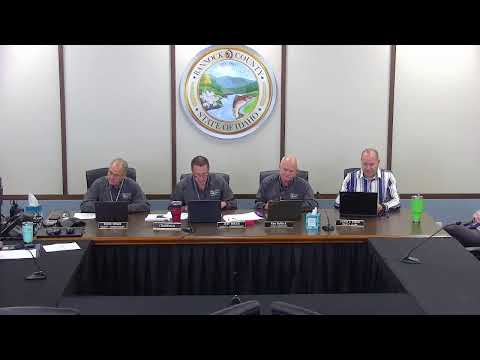
Bannock County commissioners voted to accept the county's juvenile probation and diversion annual report for County Fiscal Year 2025 after a presentation from Matt Olsen, director of the county's juvenile services.
Olsen told commissioners the county had 197 active diversion contracts as of Sept. 30 and placed 312 youth on diversion during the reporting year, down from 387 in 2024. "We diverted 68.7% of the cases," Olsen said, crediting the county's Safety and Assessment Center—often called the village—for earlier screening and services that keep youth out of formal court processing.
Olsen highlighted that 31 diverted youth were age 10 or younger, a shift he attributed to early intervention now available through the village. "The village can now take kids as young as 6," Olsen said, and staff described that earlier contact with services reduces the chance of later escalation into higher-risk involvement with the justice system.
The report also showed declines in other measures: supervised-probation intakes fell to 142 in FY2025 (from 185 in 2024), and petitions filed in juvenile court fell to 489 for the year (down from 714 in 2024). Olsen said felony counts on petitions were 85 (down from 95), misdemeanors 353 (down from 496), and status offenses 112. He noted the county's 18-year average for diversion intakes is 336 and that COVID years have affected rolling averages.
Olsen reported recidivism results for an FY2023 cohort: 11 recidivated within six months, 21 (14.5%) at 12 months and 33 (22.8%) at 24 months; he explained cohorts overlap because once a youth recidivates at an earlier checkpoint they remain counted at later checkpoints. He also reported 177 youth completed a total of 2,929 hours of community service, and restitution paid to victims in FY2025 totaled $22,720.
Commissioners asked about drivers behind age and volume trends; Todd Mogger, chief juvenile probation officer, pointed to mental-health, developmental and school-related referrals as common factors for younger youth entering diversion. Olsen and Mogger said stronger partnerships with schools and a shifting approach to school-age incidents—keeping some matters in school disciplinary processes rather than sending them to court—contributed to lower filings.
Commissioners praised staff and community partners for collaborative work and approved the report on a voice vote. The board did not direct new policy during the meeting; acceptance put the report on the record and closed the item for this session.