TARTA reports ridership gains, new service redesign, EV buses and regional studies
Loading...
Summary
TARTA told Toledo’s Mobility Sustainability Beautification Committee it has seen ridership growth across modes, has $22.9 million in capital investments, won an ODOT grant for frequency improvements, will launch a fixed-route redesign in January, is introducing 12 electric buses and is leading regional studies including WorkLink and a BRT economic layer.
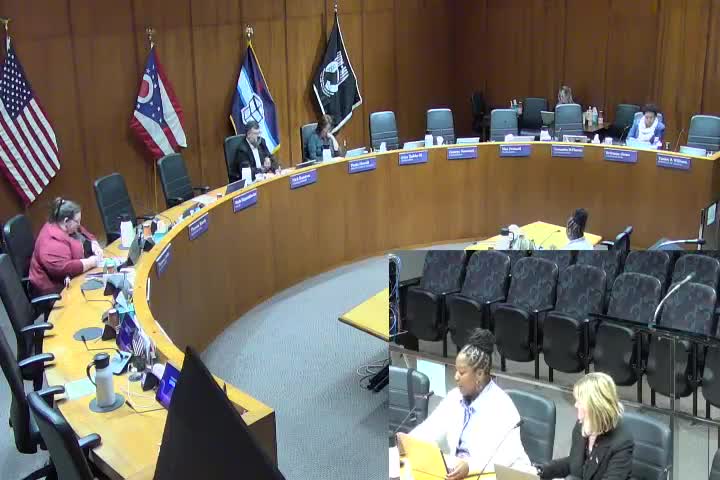
Laura Kaprowski, chief executive officer of the Toledo Area Regional Transit Authority (TARTA), told the Mobility Sustainability Beautification Committee on Nov. 13 that the agency is recording steady ridership gains and preparing several service and capital changes.
"Since 2020 we have seen sustained growth," Kaprowski said, citing a 3% increase in paratransit ridership, 9% growth in on-demand microtransit and 15% growth on fixed routes. She also said the system logged four months in 2025 exceeding 200,000 fixed-route rides per month.
Kaprowski and Kendra Smith, president of the TARTA board, described a multiyear operational plan adopted in 2022 and said the authority has about $22,900,000 in capital investments planned for infrastructure and vehicles. Kaprowski said TARTA successfully leverages federal and state grants with local matches and prioritizes local, veteran- and minority-owned contractors where feasible.
The agency plans a "mini redesign" of fixed routes launching in January to increase frequency on key corridors; Kaprowski said the redesign was informed by stakeholder engagement and customer advisory sessions. She also announced a roughly $1,800,000 grant from the Ohio Department of Transportation intended to jump-start frequency improvements.
Kaprowski said the redesign includes adding 30-minute frequency on identified high-ridership routes, launching a new Route 18 where demand exists and extending service hours so paratransit matches fixed-route hours (roughly to 11:30 p.m. on some corridors). She noted some low-performing circulator routes may be replaced by on-demand service.
The agency is introducing a fleet of 12 electric buses; Kaprowski said six will enter service initially and about 90 of the roughly 150 fixed-route drivers have completed a four-hour electric-vehicle driving training. "As a rider, you're going to enjoy a quiet, smooth ride," she said, adding the buses help neighborhood air quality and create new workforce training opportunities.
TARTA highlighted several outreach and regional planning efforts: a campaign called "Opportunity Starts Where the Bus Stops" that pairs on-route job fairs with employers; WorkLink, a Wood County mobility study costing about $500,000 (with a 20% TARTA match) to be complete by the first quarter of the next year; and a planned economic-development layer to follow a Bus Rapid Transit (BRT) study.
Kaprowski said TARTA conducts regular customer satisfaction surveys; she reported industry-competitive survey scores: about 84% satisfaction on fixed routes, 95% on paratransit and 96% on the on-demand microtransit service.
The presentation closed with TARTA inviting continued coordination with the city on bus-stop improvements funded through a local investment program created after "Issue 12" passed; Kaprowski said TARTA budgets $800,000 annually for local investments and that the City of Toledo recently received nearly $300,000 to improve 27 stops.
Next steps: TARTA staff said they will continue outreach and finalize the January service launch, continue the WorkLink study and complete the BRT technical and economic analyses.