Get Full Government Meeting Transcripts, Videos, & Alerts Forever!
Get email alerts on the Youth Empowerment Funding topic
No spam. Unsubscribe anytime.
Jacksonville committee begins workshops to guide $5 million youth empowerment plan, hears mentorship and workforce proposals
Summary
The Youth Empowerment Committee opened the first of four workshops to guide a proposed $5,000,000 fiscal‑2027 investment, hearing presentations from Jacksonville Arts and Music School and Big Brothers Big Sisters Northeast Florida on continuity, mentorship, soft‑skill training and workplace exposure.
The Jacksonville City Council Youth Empowerment Committee opened the first of four workshops to shape a proposed $5,000,000 investment for fiscal year 2027 and heard presentations from two local mentoring and training organizations about scaling programs that keep supports connected after high school.
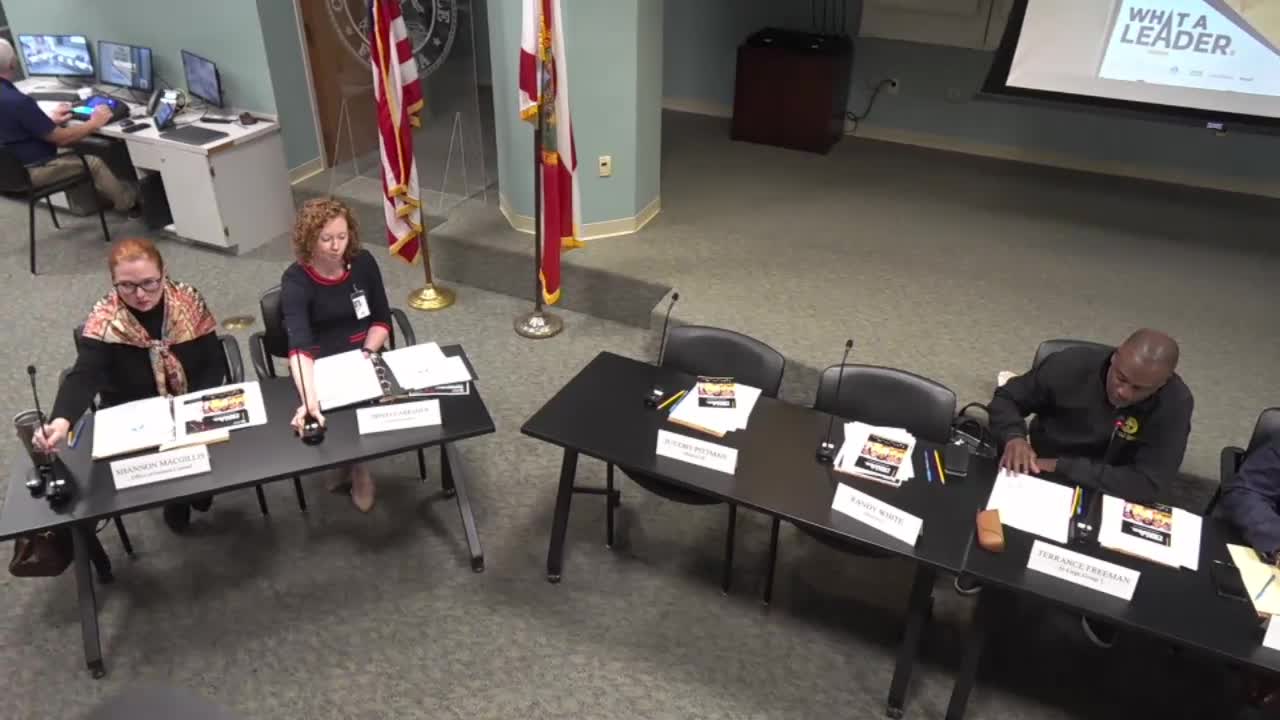
Councilman Terrence Freeman, chair of the committee, framed the initiative around four tracks — education and mentorship; recreational access and safe community spaces; job training and apprenticeships; and public‑safety lighting and technology — and said the goal is “to translate those needs into smart investments that actually move outcomes.” He told the committee this workshop will help staff draft Track 1 of a youth empowerment RFP to guide funding allocations.
John Everett, a representative from KHA, told the committee that research points to a “navigation gap” rather than a motivation gap for Jacksonville youth. “This is not a motivation gap, this is a navigation gap,” Everett said, arguing the city must fund continuity — consistent mentorship, guided pathways and paid experiences that follow young people up to age 24 — so opportunity is not determined by zip code. Everett also cited an estimate that there are “over 20,000 opportunity youth” in Jacksonville, up from about 16,900 in recent years.
Jason Peoples, executive director of the Jacksonville Arts and Music School, presented the “What a Leader” leadership curriculum, emphasizing soft skills his team calls “triple CPR” (confidence, critical thinking and communication/professionalism/relationship development). Peoples said the program served 935 students this year, about 23% more than the prior year, and reported roughly 1,874 hours of professional development delivered; he described a competition element that awards a $5,000 college scholarship and a planned beta of a multi‑badge “wall master” certification in early 2026. Peoples emphasized that soft skills and in‑person assessment matter in a job market where AI can make resumes look polished.
Committee members pressed Peoples on enrollment and data collection. Peoples said the program is free to participating school and out‑of‑school‑time programs, that partners help identify students, and that more detailed out‑of‑school enrollment data is being collected as the program expands beyond in‑school delivery.
Sarah Alford, CEO of Big Brothers Big Sisters Northeast Florida, described the long‑running “Beyond School Walls” workplace mentoring model that pairs high‑school students with industry partners for monthly on‑site exposure, training and job shadowing. Alford said the program served about 360 young people in Northeast Florida last year (the majority in Duval County) and that partnerships attracted roughly $700,000–$800,000 in support. She cited longitudinal research (Harvard and U.S. Treasury) showing mentored youth in the study were roughly 10% more likely to go to college and earned about 15% more by their mid‑20s.
Council members raised several common themes: sustainability and back‑office support for smaller nonprofits, tracking outcomes over time, expanding apprenticeship and trade pathways, and ensuring that program funding creates continuity rather than temporary interventions. Councilmember Pittman emphasized the need for diverse pathways beyond college, and members asked the mayor’s office and the chamber to help connect students to local jobs so training results in local retention.
Chair Freeman closed the workshop by directing staff to compile today’s takeaways to shape Track 1 of the youth empowerment RFP and noting the committee will continue refining allocations and policy direction across all four tracks. The next workshop will focus on recreational access. The meeting concluded after one public comment in support of youth inclusion from Trinity Shelton Jones of the Mayor’s Young Leadership Advisory Council, who said, “Young people are not just a future. We are part of the solution right now.”
No formal vote or ordinance was taken during the session; the committee’s action was limited to staff direction to use the presentations and discussion to inform an RFP and future agenda items.