Tulsa councilors press for more time, data and legal safeguards before sending sales tax measure to voters
Loading...
Summary
Council members questioned the rush to a February special election, asked for methodological backing for revenue and program estimates, and sought options to protect spending buckets; no vote to place the measure on the ballot was taken at the meeting.
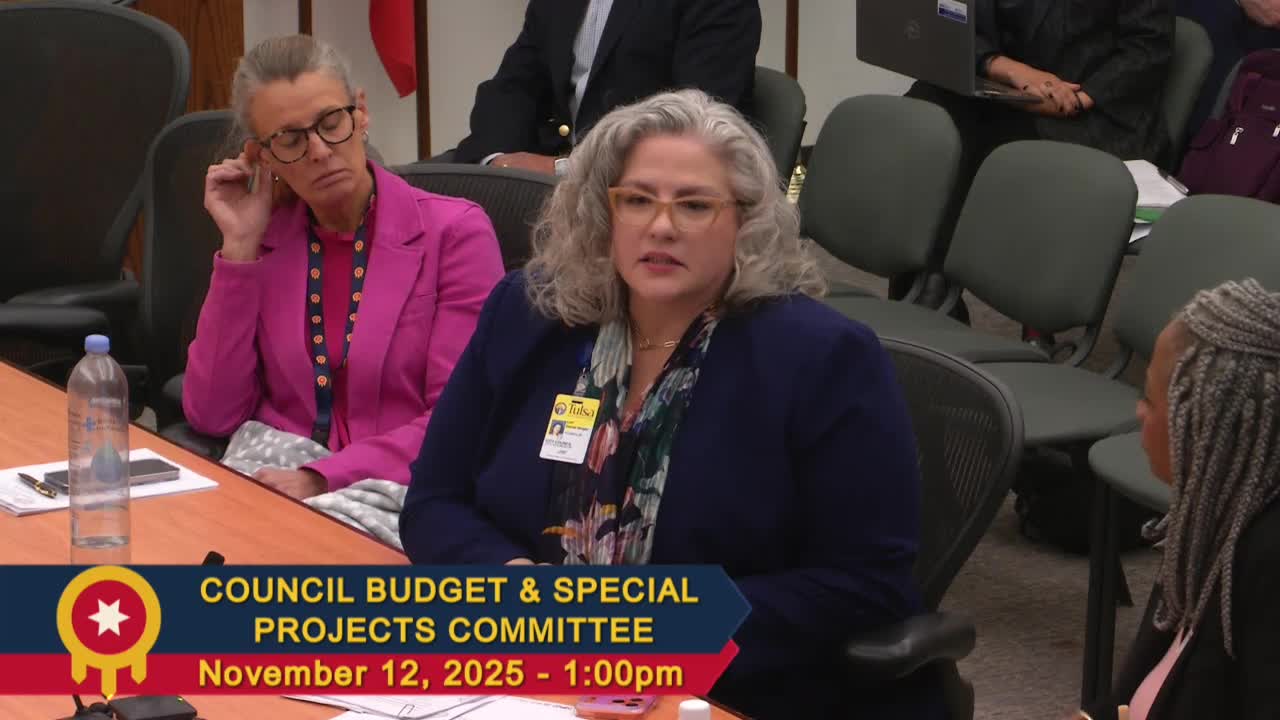
During an extended public exchange, multiple councilors (recorded here as Speakers 2, 3, 4, 5, 6 and 7) pressed the mayor's administration for more information before agreeing to a ballot timeline. Concerns included the short review window, the absence of detailed methodology behind cost and participant estimates for programs, the regressive nature of sales taxes and whether the city could legally carve exemptions for basic goods. Several councilors asked whether the ballot measure could include ordinance language or a charter amendment to create protected spending “buckets” so that, if voters approved the tax, specified shares would be dedicated to homelessness, children/youth, public safety or business retention.
Councilor (Speaker 2) said the packet had been provided only days before the requested Nov. 19 vote and that councilors needed additional time to review program details and meet with providers; Speaker 2 said she could not support forwarding a permanent, undedicated tax without that collaborative process. Councilor (Speaker 7) and others raised concerns about voter education and the practical constraints of a Feb. 10 special election window. Mayor (Speaker 1) acknowledged the tension and said he would support protecting portions of the revenue in the budget process if the measure passed, but urged the council to vote by Nov. 19 in order to put the matter on the Feb. 10 ballot so funds would align with the next budget cycle.
No formal motion or vote on ballot placement occurred at the meeting. Councilors requested follow‑up: the underlying methodology for program cost and capacity estimates, legal counsel on permissible exemptions or protections, and additional briefings with program partners such as Green Country Workforce and organizations referenced as CLUTCH and Madison Strategies.