
Minneapolis committee reviews stand-alone public-restroom models, highlights PV Plaza and pilot approaches
Get AI-powered insights, summaries, and transcripts
Sign Up Free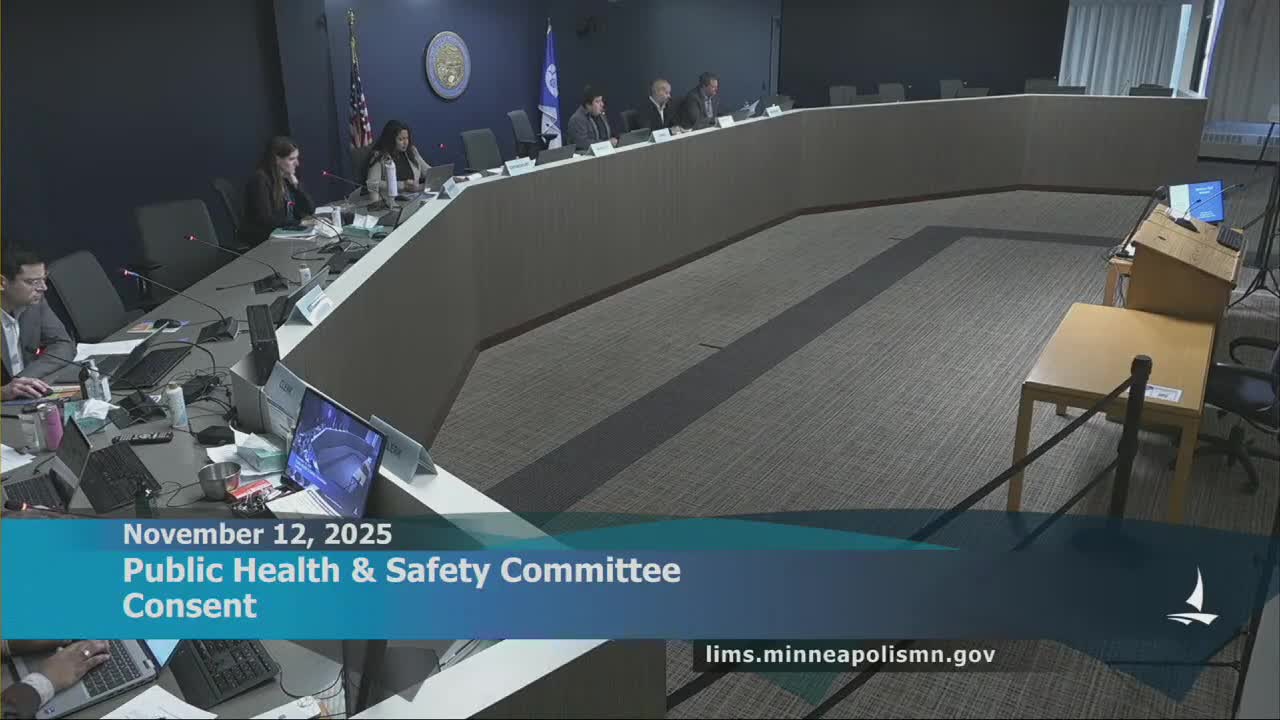
Summary
Policy staff presented a national landscape review and local options for stand-alone public restrooms, citing PV Plaza's seasonal trailer, multiple model choices (Portland Loo, Throne Labs), winterization and monitoring needs and the importance of pilots and partnerships with park, public works and downtown improvement district staff.
Chair Jason Chavez invited Ashley Jook of the Policy and Research Division to brief the Public Health and Safety Committee on stand-alone public-restroom options on Nov. 12.
Jook said Minneapolis appears to have more public restrooms than the U.S. average (about 18 per 100,000 people versus an estimated U.S. figure cited in the report) but still lacks sufficient, equitable public access. She summarized a report of 13 example cities and emphasized that no single model fits every site: cities use a mix of permanent utility-connected units, portable trailers, high-tech automated toilets and partnership strategies with private businesses.
The presentation highlighted PV Plaza's seasonal restroom trailer, which Jook said was built in 2019 for about $79,000, is connected to electrical, water and sewer through a sidewalk manhole into the plaza mechanical room, is owned by the city and is operated and staffed seasonally by the Minneapolis Downtown Improvement District (DID).
The report flagged four recurring planning considerations: pilot programs before permanent installations, model selection to match climate and usage, visible siting and monitoring to limit illicit activity, and the need for attendants or routine cleaning at higher-use sites. Several cities in the review use timed-entry doors and access-card or app-based controls to discourage vandalism; Throne Labs, a private vendor, uses remote sensors and an access system that can distribute cards for those without smartphones.
Council members pressed on costs and winterization. Jook said trailer models and some branded units include winterization packages (extra insulation and active heating) but that technical feasibility depends on site utilities; PV Plaza was feasible because of an existing mechanical room. She recommended pilots and further engineering study for colder-climate suitability.
Council members suggested near-term steps that include incentivizing private businesses to open restrooms to the public, coordinating with DID and property owners, and pursuing a long-term restroom strategy to embed facilities in future infrastructure projects. Chair Chavez directed the clerk to receive and file the report.
The committee heard additional examples from other cities where restrooms connect to broader support services (peer support, naloxone distribution and referrals) and noted community engagement is essential to siting and operations. No formal ordinance or funding decision was made; the report was filed for follow-up.