Get Full Government Meeting Transcripts, Videos, & Alerts Forever!
Get email alerts on the Water Rates topic
No spam. Unsubscribe anytime.
Mesa council narrowly coalesces around a 2.5% water‑rate option as staff outlines capacity‑fee tradeoffs
Summary
City staff presented scenarios that would shift project costs into capacity fees and offered two residential options; after extended debate council signaled consensus to place a 2.5% residential increase (with larger commercial increases) on the Nov. 17 agenda for formal action.
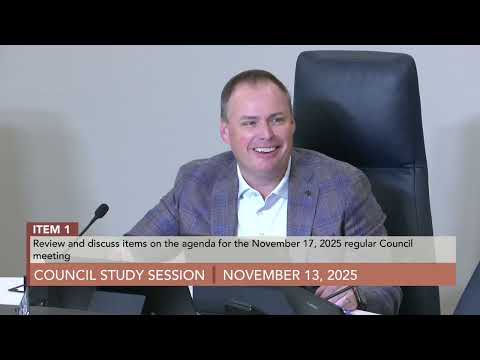
Mayor Freeman and city staff steered the Mesa City Council toward a compromise on Nov. 13 as officials balanced residential relief with long‑term utility needs. Management and Budget Director Brian Mitchell and Water Resources Director Chris Hassert presented rate‑adjustment options and a capacity‑fee scenario that staff says would move about $400 million in projects into fee funding over the next decade.
Mitchell said staff’s preferred forecast included modest across‑the‑board service‑charge and usage increases and explained how alternative scenarios would shift costs between residential and commercial classes. "If we did a 2 and a half percent across the board for service charge and usage charges for both residential and multi‑unit, commercial service charge would be at 7 and a half percent," Mitchell said, laying out the tradeoffs for council.
Why it matters: staff told council the city deferred roughly $180 million in maintenance projects during budget planning and that capacity fees could recapture hundreds of millions of dollars of expansion and capacity work without increasing operating pressure on rates. Council members warned that underestimating future needs can force much larger, abrupt hikes later.
Council members pressed staff for account‑level impacts. Mitchell walked the council through “typical‑customer” bills, saying a typical single‑family residential account using about 6,000 gallons per month would see roughly a $1.84 monthly increase under the recommended scenario (about a 4.2% blended impact). He also flagged that residential customers now represent roughly 90–93% of meter counts, with commercial customers accounting for under 6% of meters but a much larger share of total consumption.
Several council members expressed concern about burdening small businesses. Council Member Heredia noted many small businesses lease space and ultimately bear cost increases in their rents; others noted breweries and water‑intensive firms could be disproportionately affected. Council Member Adams and others urged staff to justify transfers from the utility fund to the general fund, noting an ordinance caps the transfer at up to 30% of operating revenues for specified general‑government/public‑safety support.
After extended discussion, Mayor Freeman asked for council direction to place a preferred option on the Nov. 17 agenda. "Personally, I want to move with the 2 and a half percent," he said, and multiple members signaled they could live with that compromise; others preferred the original 3.5% recommendation to protect long‑term reserves. Staff said the Nov. 17 packet would reflect the council's direction and that any increases beyond what was noticed would be introduced later with additional public notice and a separate effective date.
Next steps: council directed staff to bring the 2.5% option (with the corresponding nonresidential adjustments) to the Monday agenda for formal introduction and to publish supporting material so the public and businesses can review the proposed ordinance and effective dates. Final action is scheduled for subsequent meetings; staff said some nonresidential increases would require an additional notice and an April effective date for those percentages.
Ending: The study session closed with staff committing to provide more detailed reserve and transfer calculations, and to circulate the detailed support slides and typical‑customer breakdowns to council prior to Monday’s meeting.