
Laredo utilities says system in compliance after temporary disinfectant change
Get AI-powered insights, summaries, and transcripts
Sign Up Free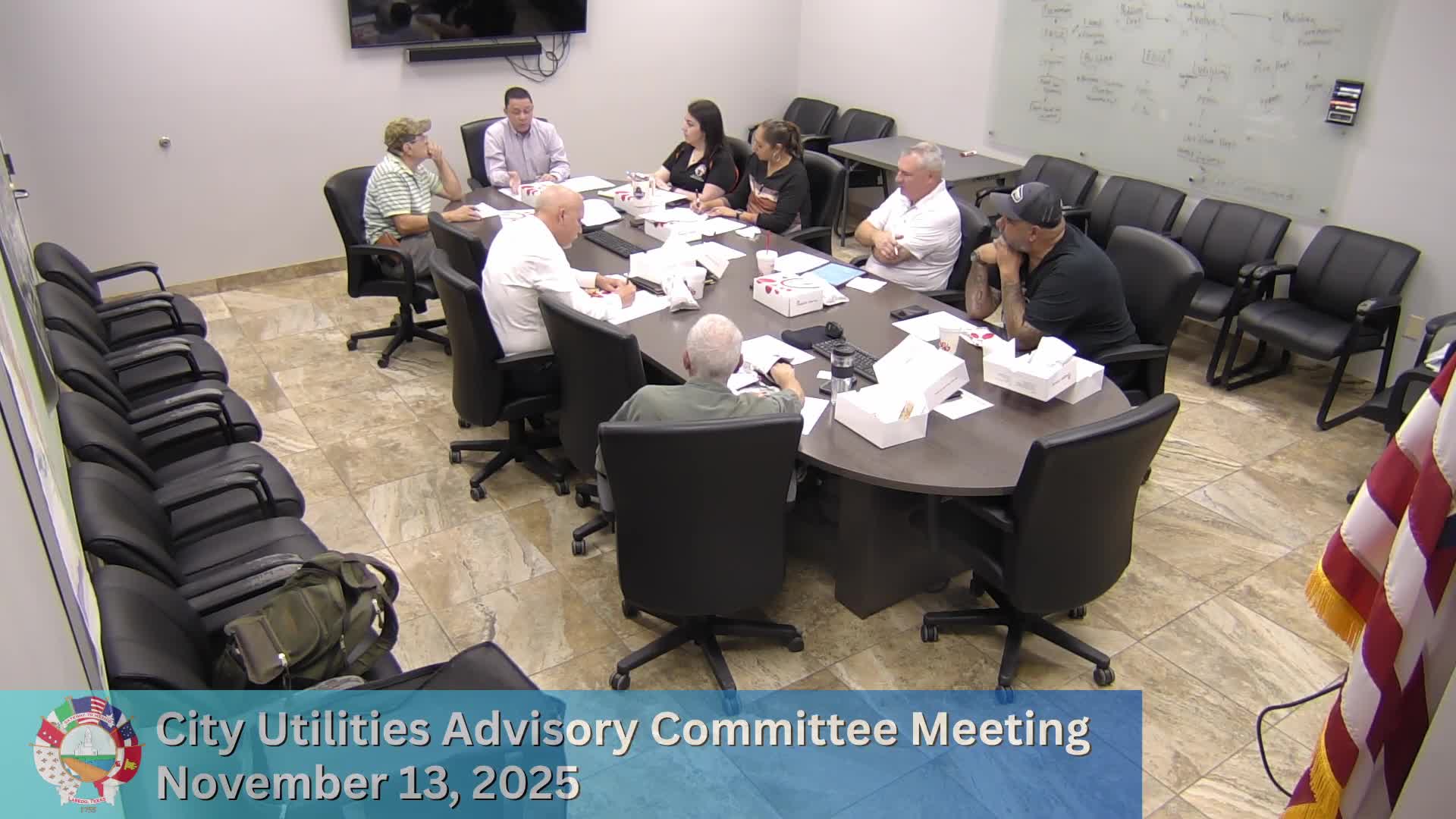
Summary
City utilities staff told the advisory committee Nov. 13 that the drinking-water system is in compliance with TCEQ requirements after a month-long switch from chloramine to free chlorine and routine flushing; staff said they will continue monthly sampling and monitoring.
LAREDO, Texas — City of Laredo utilities staff told the Utilities Advisory Committee on Nov. 13 that the municipal drinking-water system is in compliance with state regulators after a recent, temporary change in disinfection practice.
Dr. Keith, a utilities department staff member, said the department switched from chloramine to free chlorine for about a month “to refresh the system,” then returned to chloramine. “We have collected 5 months of samples, and we passed the [tests] with TCEQ,” Dr. Keith said. The department also uses automated flushers at dead ends and reports that it conducts approximately 180 samples a month across the city.
The committee learned that the temporary move to free chlorine may have been noticeable to customers as a stronger chlorine or “swimming-pool” smell, which Dr. Keith described as an expected side effect of the short-term practice to restore residual disinfectant levels. Staff emphasized that the change was a routine operational step rather than a response to an advisory or contamination event.
City staff reviewed monitoring and reporting obligations: the department must notify regulators and the public within 24 hours if contamination is detected. Dr. Keith said the city has been performing monthly flushing at dead-end lines and operates automatic flushers installed to keep water moving and maintain residual chlorine in areas without looped mains.
The committee discussed Laredo’s limited looped distribution system and its implications: staff said loop improvements are costly and unlikely to be fixed quickly, so the department uses flushing and targeted replacements as interim measures. Members asked for technical guidance on where flushing occurs and for continued reporting to the committee.
Next steps: staff said they will continue monthly sampling and return with updates at future meetings; formal approvals that require a quorum will be scheduled when attendance permits.