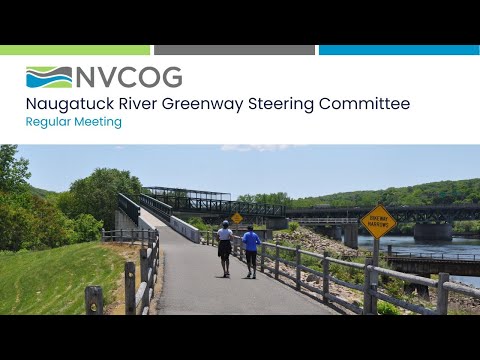
Federal RAISE cancellation stalls multi-town Naugatuck River Greenway design
Loading...
Summary
Regional planners said a cancelled $5.2 million RAISE award will force a piecemeal approach to design work, putting five projects that were near construction on hold and increasing pressure on local matches and timelines.
Regional planners told the Naugatuck River Greenway committee that a federal RAISE grant worth about $5,200,000 was canceled, leaving design work for roughly 12 miles of trail fragmented and putting five near-ready projects on hold.
Mark (presenter) said the award would have funded a consolidated design covering roughly 12 miles between Greenfield and Elm Street in Thomaston and would have enabled about 16 miles of built or designed sections. "We had been awarded about 5,200,000 under the federal RAISE program to do a full design of, you know, roughly 12 miles," he said. "Unfortunately, that program or that grant was canceled, and so we're now scrambling to try to figure out how to put the pieces together."
Committee members described immediate consequences: several towns had committed prior Recreational Trails grants as the nonfederal match for the RAISE application, and those sections were paused while the regional team negotiated the federal contract. NVCOG staff said the cancelation returned the group to a piecemeal approach, where each municipality must advance its own design and match funding rather than relying on a consolidated federal design vehicle.
Rista Malanca asked whether the cancellation signaled broader risk to other programs. Mark replied that the cancellation notice said the project "didn't meet with the administration's priority of supporting vehicle travel under a multimodal program," and that formula programs such as Transportation Alternatives (TA) are protected by statute. "TA is not in danger of being canceled because, again, that's a specific program dedicated to specific activity in its formula through the legislation," he said.
Planners warned that projects at earlier stages — where federal funds have not been obligated — remain more vulnerable. "The fact that they're not obligated is, to me, a concern," one presenter said, urging towns to meet contract milestones and submit reimbursement requests on schedule so grants are not flagged as nonperforming.
The committee discussed options to move forward without the RAISE consolidation, including seeking larger TA or BUILD discretionary grants in future cycles and using local Recreational Trails awards and NVCOG in‑house work to cover nonfederal shares. No new federal award was announced at the meeting.
The committee asked staff to pursue multiple paths to advance design work and to notify member towns of near-term actions to protect existing obligated funding.