Get Full Government Meeting Transcripts, Videos, & Alerts Forever!
Get email alerts on the Homelessness Funding topic
No spam. Unsubscribe anytime.
Montgomery County warns federal NOFO changes could slash homelessness funding and imperil services
Summary
County HHS leaders told the Council committee that proposed HUD Continuum of Care changes could reduce funding for permanent supportive housing and rapid rehousing from about $10 million to roughly $3 million, potentially affecting hundreds of people and creating a funding cliff for local nonprofit partners.
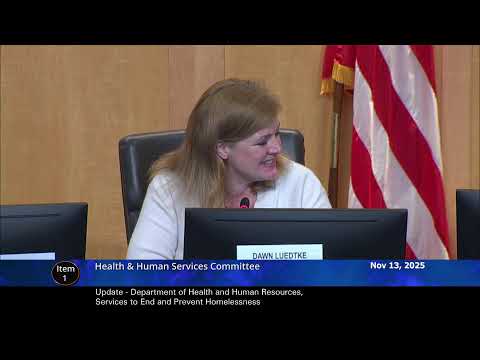
County officials warned the Montgomery County Council Health and Human Services Committee that proposed changes to the federal HUD Continuum of Care notice of funding opportunity (NOFO) could sharply reduce local grants and disrupt services for people experiencing homelessness.
Diana Pina, Deputy Chief of Services to End and Prevent Homelessness, said national analysis suggests the NOFO could impose a 30% cap on funding for permanent supportive housing and rapid rehousing programs and reprioritize scoring in ways that favor other program types. Pina told the committee that a cap “could reduce funding from about $10,000,000 to $3,000,000,” and that the timing of the application cycle — expected in January with awards not until June — would leave many local nonprofit contracts with potential gaps between January and June.
Pina gave a local impact estimate: about 800 people the continuum currently houses could be affected, including 274 children and 54 people age 65 and older. She said those numbers are divided between permanent supportive housing (PSH) and rapid rehousing programs and warned that expiring local grants could leave partner agencies without rent or payroll funds during the award gap.
Christine Hong, Chief of Services to End and Prevent Homelessness, told the committee staff and partners began communications weeks earlier and organized advocacy to try to prevent the change, but that the continuing resolution did not extend the prior NOFO timeline. Hong said the department is readying contingency plans and coordinating with the county executive and neighboring jurisdictions to reduce harm if the NOFO is published as anticipated.
Council members pressed staff on notification and regional coordination. Councilmember Lukey and Council President Kate Stewart said they would support escalated regional advocacy through the Metropolitan Washington Council of Governments. Staff said they are meeting regularly with Prince George’s County and other regional partners to share data and explore joint solutions.
Officials outlined short-term mitigation measures under review, including temporarily adjusting subsidy lengths, selectively granting local exceptions for some households, requesting state gap funding, and working with the Housing Opportunities Commission to open vouchers for households impacted by federal reductions. Hong cautioned that many strategies are still being developed and that staff are continuing to refine specific proposals with partner agencies.
The county asked the committee for continued support and said it will return with more specific budget and program adjustments once the NOFO text and award timing are confirmed. The committee did not take formal action at the meeting; members pledged to help with regional advocacy and to work with the executive on contingency funding options.