
Wheeling CCSD 21 approves 2025 property tax levy, TAN authorization and immigration‑enforcement property restriction
Get AI-powered insights, summaries, and transcripts
Subscribe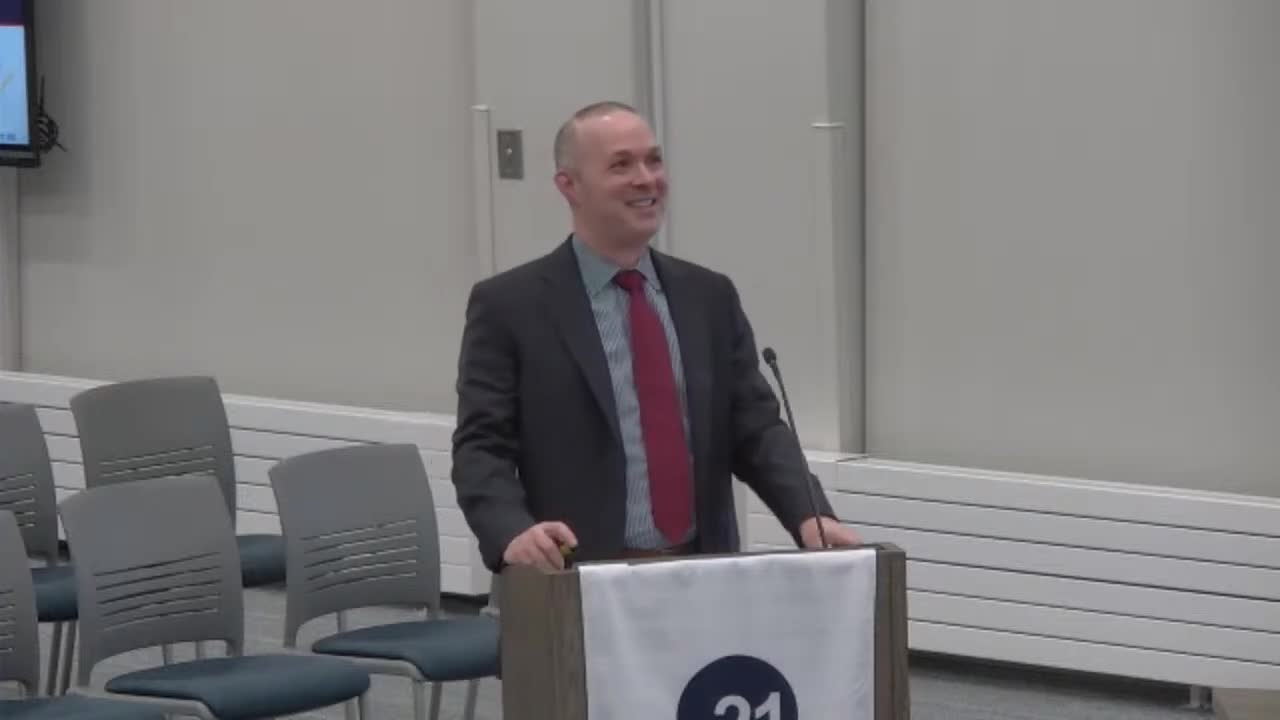
Summary
The board approved a 2025 property tax levy (4.63% ask), instructed levy allocation to education, authorized taxable tax anticipation warrants as contingency, and unanimously adopted a resolution prohibiting district property use for federal immigration enforcement operations.
At its Nov. 13 meeting, the Wheeling CCSD 21 Board of Education approved several financial and policy resolutions: the 2025 property tax levy, procedural instructions on levy allocation, authorization for taxable tax anticipation warrants (TANs) as contingency, and a separate resolution prohibiting the use of district property for federal immigration enforcement staging or operations.
Finance staff presented the levy and supporting compliance checks. Mike Zager summarized the ask and statutory safeguards: “we're asking for a 4.63% increase,” he said, explaining that the district is capturing 2.99 percent on existing property (CPI) plus 1.73 percent to account for new property. Zager reviewed the Miller ratio and Public Act calculations and said the district remains well under thresholds that would trigger tax‑appeal risk.
The board voted on the levy resolution after a motion and second; recorded roll call showed the motion carried with all members voting in favor. The board also passed a procedural resolution directing the county clerk to allocate levy reductions to the educational line for easier budgeting.
On cash‑flow contingency, the board authorized issuance of taxable tax anticipation warrants (not to exceed $47,000,000) to guard against potential delays in Cook County tax receipts; staff described the move as insurance and said they do not expect to issue warrants but need the authority if receipts are late.
Separately, Superintendent Connolly introduced a resolution prohibiting district property from being used as staging, processing or operational bases for federal immigration enforcement, mirroring recent actions by the Village of Wheeling and nearby counties. “that is a federal enforcement … we are not involved with,” Connolly said; the board adopted the resolution unanimously and staff said signage will be posted on district grounds.
Several procedural minutes and amended minutes were also approved earlier in the meeting under the consent motions; votes were recorded on each motion. The meeting recessed into closed session on personnel and real estate matters without returning for further action.
These formal actions were taken by recorded motion and roll‑call vote during the meeting.