Senate committee holds bill that would exempt private property from sign permits after safety, free‑speech debate
Loading...
Summary
The Committee on Government Operations heard hours of testimony on bill 36‑0052, which would amend Title 29 §502 to limit permit rules to public property. Department of Public Works warned the change would hamper traffic‑safety oversight and program enforcement; supporters said private owners’ speech rights deserve protection. The committee voted to hold the bill for amendment.
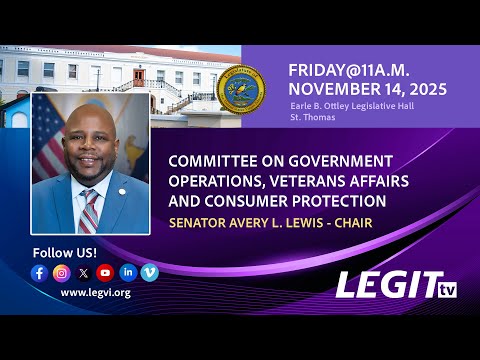
The Committee on Government Operations, Veterans Affairs and Consumer Protection on Nov. 14 heard competing views on bill 36‑0052, which would amend Title 29, chapter 9, §502 of the Virgin Islands Code to apply the territory’s advertising‑device permitting rules only to public property.
Sponsor Senator Carla J. Joseph told the committee the amendment is meant to safeguard private‑property free speech and end uncertainty for property owners. "The right to free expression is a constitutional right, and it must be safeguarded, not restricted, especially on private property," she said during introduction remarks.
Derek Gabriel, commissioner of the Department of Public Works, testified the current permit program supports traffic safety and program administration. Gabriel said permits and inspections let the department ensure signs do not obstruct sightlines or create driver distractions and that fee revenue helps fund program staff and enforcement. "Removing private property from the permit process would eliminate this crucial oversight and increase the department's administrative burden," he said.
Roger B. Minkoff, a realtor testifying as an individual, urged lawmakers to protect yard‑sign speech on homeowner land, calling the bill a defense of free expression. "Freedom of speech is a right," Minkoff said.
Russell Pate, president of the Virgin Islands Bar Association, provided legal context and urged the legislature to examine the statute’s history and the territorial legal framework before broad changes. Pate noted the Revised Organic Act governs constitutional protections in territories and recommended careful tailoring of any amendment.
Key operational details aired during the hearing: DPW said its permit window runs from one to six months (a six‑month permit is $100 per sign; an annual permit $145; digital billboard fees cited at $125 for six months and $170 annually), that DPW personnel make a courtesy contact and will remove noncompliant signs after 30 days if owners do not act, and that last fiscal year advertising revenue statewide was described as just under $50,000 (commissioner said roughly $48,000). Gabriel said some sign‑related federal standards, including the Highway Beautification Act, can affect permitting and federal funding.
Lawmakers pressed for precise statutory language, especially the current 50‑foot setback measured from the roadway centerline. Multiple senators expressed support for preserving private‑property rights while carving out narrow, safety‑focused regulation — for example, limiting DPW review to signs within a smaller proximity to a road edge or explicitly restricting regulation to safety (not aesthetics). Several members said they expected sponsor amendments and legal counsel drafting to address outstanding concerns.
After the testimony and a timed round of questions, Senator Carla Joseph moved to hold bill 36‑0052 in committee at the call of the chair. The motion carried by roll call (7 yeas, 0 nays). The committee recorded the vote and will accept drafting suggestions and amendments for future consideration.
The committee record shows the central tension lawmakers must resolve: how to protect private‑property owners’ rights of expression while retaining the ability to regulate signage that demonstrably creates safety hazards on public roadways. The bill will remain in the committee so sponsors and counsel can propose specific amendments — such as a reduced setback, a safety‑only standard, or explicit limits on DPW authority to enter private property — before a future vote.